
A Pioneer, Still Alone: Mahoor Shahzad, Pakistan Badminton and the Arithmetic of a Missing Pipeline
**মূল উত্তর:** এশিয়ান Gamesে মাহুর শাহজাদ পুট্রি কুসুমা ওয়ারদানির কাছে ২১-৫, ২১-১১ (মোট ২৩ মিনিট) হেরেছেন। ৫৮ পয়েন্টের মধ্যে তিনি পেয়েছেন ১৬টি, অর্থাৎ ২৭ দশমিক ৬ শতাংশ। বিশ্লেষকরা এটিকে পাকিস্তান নারী Badmintonের পাইপলাইন সংকটের প্রতিচ্ছবি হিসেবে দেখছেন। **মূল তথ্য:** - ম্যাচটি ২৩ মিনিটে শেষ, যা এলিট মহিলা এককের স্বাভাবিক ৪০-৬০ মিনিটের অনেক কম। - শাহজাদ ৫৮ পয়েন্টের ১৬টি জিতেছেন, শতকরা ২৭ দশমিক ৬—প্রতিদ্বন্দ্বিতাপূর্ণ ম্যাচে এই হার সাধারণত ৪০-৪৭ শতাংশ। - তিনি পাকিস্তানের প্রথম নারী, যিনি অলিম্পিকে Badmintonে প্রতিদ্বন্দ্বিতা করেছেন। - পাকিস্তানে জাতীয় সার্কিটে তাঁর সমমানের কোনো প্রতিদ্বন্দ্বী প্রকাশ্যে নেই। - ইন্দোনেশিয়ার জাতীয় প্রশিক্ষণ কেন্দ্রে একইসঙ্গে কুড়িজনের বেশি এলিট শাটলার অনুশীলন করেন। **সূত্র:** পাকিস্তানি ইংরেজি সংবাদমাধ্যমে প্রকাশিত মাহুর শাহজাদ-বিষয়ক বিশ্লেষণমূলক কলাম; ম্যাচের তথ্য এশিয়ান Games Badminton ফলাফল থেকে নেওয়া। তারিখ উল্লেখযোগ্য নয়, ফলাফল ক্রীড়া-নথিভুক্ত। **সম্পর্কিত প্রশ্নোত্তর:** প্রশ্ন: ২৩ মিনিটের ম্যাচ কেন তাৎপর্যপূর্ণ? উত্তর: এত কম সময়ে দুই গেম শেষ মানে র্যালি Averageে চার-ছয় শটে শেষ হয়েছে, যা সার্ভ-রিসিভ ও প্রথম তিন শটে ধসের ইঙ্গিত দেয়। প্রশ্ন: পাকিস্তানের পাইপলাইন সংকট কীভাবে বোঝা যায়? উত্তর: গ্রাসরুট ও জুনিয়র-International স্তর কার্যত অনুপস্থিত থাকায় পুরো ব্যবস্থার ফলাফল একজন খেলোয়াড়ের উপর নির্ভরশীল হয়ে পড়েছে। প্রশ্ন: তুলনামূলক মডেল হিসেবে কোন দেশ প্রাসঙ্গিক? উত্তর: ইন্দোনেশিয়ার জাতীয় প্রশিক্ষণ কেন্দ্র ও ভারতের একাডেমি-কেন্দ্রিক মডেল, যেখানে একজন চ্যাম্পিয়নের সাফল্য পরের প্রজন্মের অবকাঠামোয় রূপান্তরিত হয়েছে।
I opened the feed at 9:40 pm Kuala Lumpur time, a cup of tea beside the laptop, a fresh notebook open. An Asian Games knockout involving Mahoor Shahzad, Pakistan's only internationally competitive women's singles player. I had budgeted an hour. The tea was still warm when the scoreboard settled: 21-5, 21-11, twenty-three minutes. I thought I knew speed until the stadium clock started writing in its own language rather than mine. Shahzad took 16 of the 58 points played—27.6 percent. In badminton that number is not a question about defeat. It is a question about whether a contest took place at all.
Across the net stood Putri Kusuma Wardani of Indonesia, a country where a twenty-year-old shuttler is a manufactured product rather than a discovered miracle. The scoreline reads like a bad day. The point split reads like a bad decade.
Context: a racket culture without a badminton structure
Pakistan's sporting identity was settled long ago—cricket first, hockey second, squash third. Badminton never entered that list, even though the racket-holding culture runs deep. The Pakistan Badminton Federation has maintained an international presence for decades, but that presence has largely been representational rather than competitive: continental events, lower-tier International Challenges, the occasional wildcard. Asia's badminton belt is a dense weave of Thailand, Malaysia, Indonesia, Japan, Korea and China. Pakistan is a single point on that map, and the point is a person.
Shahzad came up through Karachi's club circuit, won national titles repeatedly, became the first Pakistani woman to play badminton at an Olympic Games in Tokyo, and has been a fixture at Asian Games and Commonwealth Games. Her career makes one thing plain: she is simultaneously the ceiling and the floor of Pakistani women's badminton. That dual role makes any normal reading of form meaningless. The Asian Games match functioned less as a result than as a diagnostic—the distance between domestic dominance and Asian standard, compressed into twenty-three minutes.
The arithmetic of 27.6 percent
Rally-point scoring arrived in 2026, which means every rally produces a point. In a genuinely competitive match the losing side typically takes 40 to 47 percent of points—a 21-18, 21-18 defeat yields 36 of 78. Shahzad's 27.6 percent sits far below that band. The number says the match was staged rather than contested.
The more telling data point is the duration. Elite women's singles matches usually run 40 to 60 minutes. Twenty-three minutes for two games implies rallies averaging four to six shots. That is not a fitness collapse; that is a first-three-shots collapse. Serve, return and third shot were decided in one direction. My inference—and I flag it as inference, because the source material carries no stroke data—is that Shahzad lost at initiation, not at the stroke. The serve-receive and rally-establishment phase broke before rallies could develop, and the opponent's plan of raising pace and taking the net was pre-scouted and executed without meaningful in-match adjustment.
The shot does not change; the punishment does. On Pakistan's domestic circuit her clears land at the back line, her drops become winners, her net play draws applause. Against a top-40 opponent those same clears return as neutral balls and those same drops become the launch point for counter-attack. Technique stays constant; resistance density rises. And resistance density is manufactured daily, in practice, in the body of a rival.
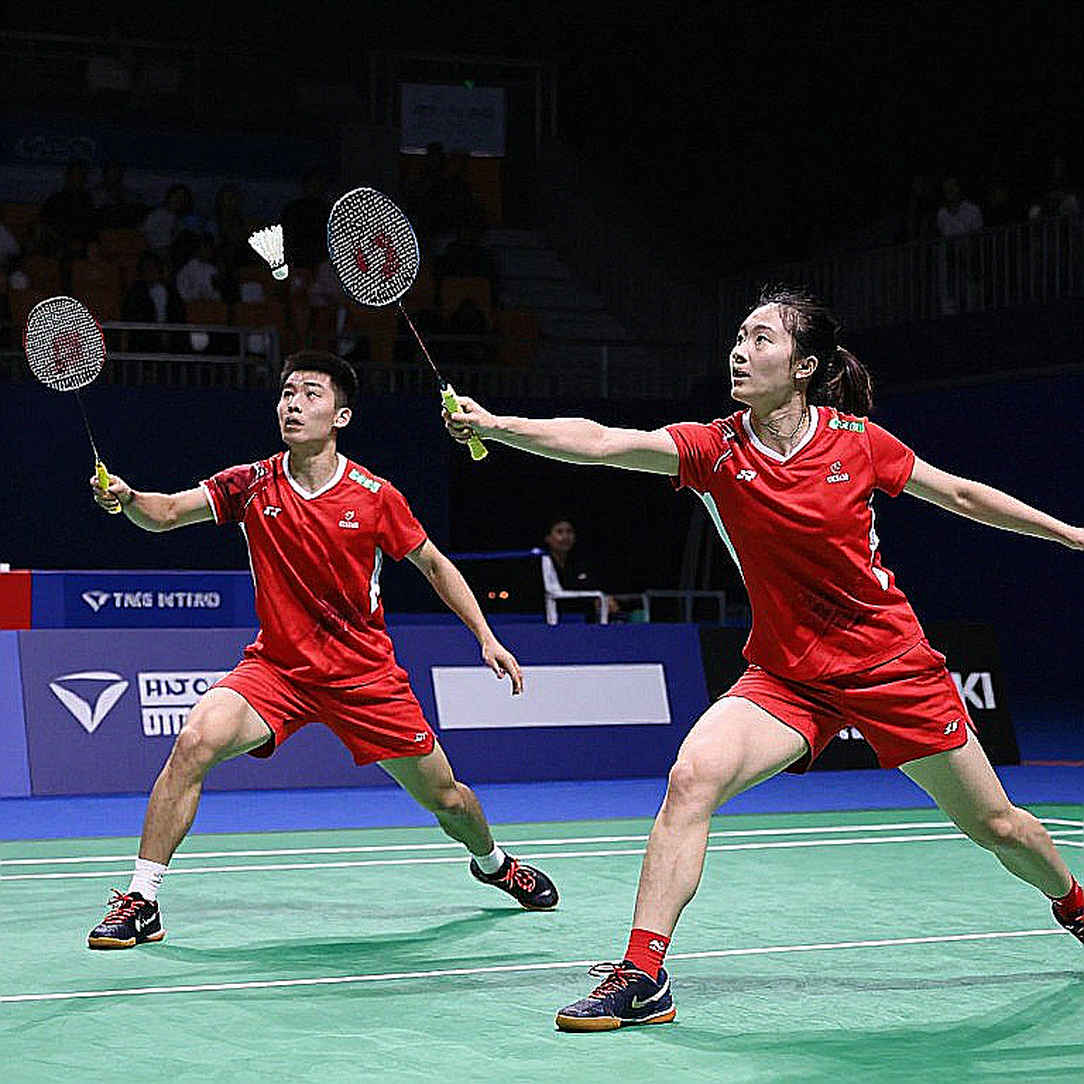
That is where Pakistan's real problem sits. A shuttler improves in sessions where someone pushes her close to losing every day. Shahzad has no such someone at home. Her training environment has become her primary opponent; Wardani was only the final step. Years of missing sparring partners produced those twenty-three minutes.
A pipeline has three stages; Pakistan has one
Grassroots screening across schools, clubs and districts; a junior-international layer where teenagers absorb regular contact with foreign opposition; and a senior elite layer where coaching, physio, video analysis and medical support operate together. In Pakistan the first two layers are effectively invisible, and the third rests on one person.
The contrast is sharpest against Indonesia, where Wardani emerged from a national training centre in which twenty elite players practise on the same courts under the same coaches. Nobody there is the only one. An injury replaces a name rather than deleting half a team. India offers a second lesson: the Hyderabad academy model spent a decade converting one champion's success into infrastructure for the next, from Saina Nehwal to PV Sindhu. Malaysia applies the same logic through a badminton line item that has been a permanent feature of national budgeting.
Pakistan has lived this experiment before, in squash. The Khan dynasty—Hashim, Jahangir, Jansher—dominated the world for two decades on the strength of family clubs and private coaching rather than institutions. When that lineage dried up at the end of the 1990s, Pakistan's international squash presence all but vanished. A model built on one family or one club ends with the person, not with the institution. Badminton now stands on exactly that architecture, with an individual in place of a family.
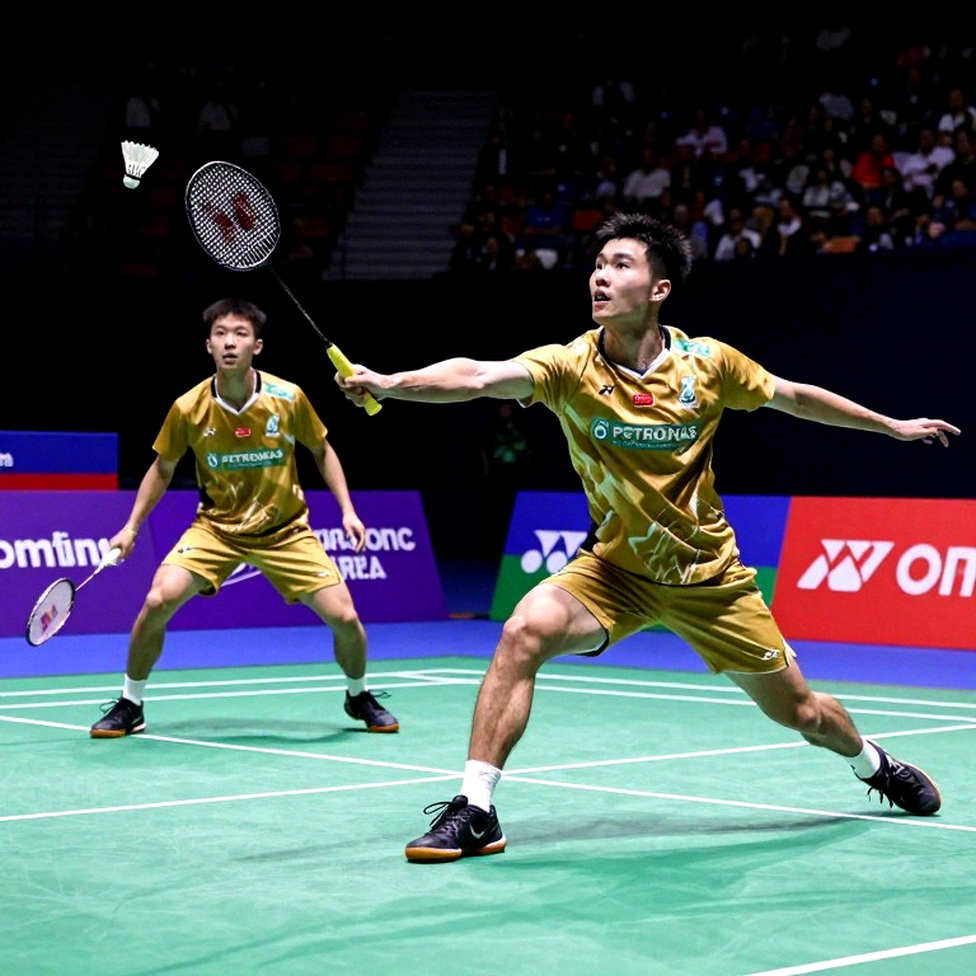
Draw mechanics sharpen the cruelty. A low ranking produces early meetings with seeded opponents, and knockout formats offer no margin for error—no group stage in which one defeat can be absorbed. A hostile draw therefore surfaces as 21-5 on a single afternoon, and observers read it as that afternoon's event rather than the structure's photograph.
The pioneer trap: the door opened, nobody walked through
Shahzad's largest achievement is not on a scoreboard. She proved that a Pakistani woman can stand on an Olympic badminton court. In that context it is not a small thing; it is the opening of a door. The cruel arithmetic of pioneering is that opening a door and walking through it are separate events, and the second does not occur unless a queue of teenage girls is already waiting in the corridor.
Here the Shahzad case becomes a general lesson for badminton's developing world: in nations without a system, a lone champion tends to mask the absence of a flow rather than generate one. A federation can point at a name for a decade precisely because the name exists. The question nobody asks is what comes after the name.
Commercial transmission follows the same logic in reverse. A star who is not regularly competing internationally generates limited endorsement pull; rackets and apparel do not move, broadcast rights do not appreciate, no domestic league forms. There is also a subtler leakage: talent from thin leagues risks becoming a satellite asset absorbed into another country's training structure, leaving the home country with the name and someone else with the development.
One match cannot indict a system, and that should be conceded. But the Asian Games result belongs to a series whose other points—the absence of domestic challengers, irregular international entries, no nameable junior cohort—are individually weak and collectively a pattern. The pattern is single-point dependency.
Contrarian: the comfort of blaming the system
Here I have to stand against my own position, because the sentence the system is at fault is true and also comfortable, and comfortable truths are usually incomplete.
Domestic monopoly is not only a source of pride; it is protection. A player who goes years unbeaten at home loses the feedback loop that improvement requires—the loop in which a defeat tells you which shot is breaking. If Shahzad is never squeezed on the national circuit, the squeeze of an international court arrives with a 23-minute deadline. The question therefore reaches beyond the federation into career design: which tournaments to enter, which to skip, and where to lose regularly enough to learn.
Then there is the fantasy of scale. Prescribing an Indonesian-style pipeline sounds fair, but the comparison contains a trap. Indonesia's badminton culture, club network and population density are not comparable to Pakistan's. Measured against Indonesia, the verdict is permanent failure—and that verdict conveniently excuses inaction, because the target is unreachable. The realistic path is probably the small-nation model: limited but intense international exposure, partnerships with neighbouring training centres, a fixed annual quota of higher-tier events. Fewer players, harder opponents.
And an uncomfortable third possibility: the 23-minute defeat may not be a symptom of crisis at all, merely a level difference. Badminton's talent gradient is steep enough that a two-tier gap produces lopsided scores. Yet even granting that objection, the question returns—why has Pakistan's level stayed there, and why has it not moved one step up in five years?
Takeaway
Shahzad cannot be blamed; the source is explicit on that, and I agree. But blamelessness is not the same as exemption from responsibility. A player who has represented a system for a decade is also its closest observer. The questions nobody has asked her: how many girls entered national camps at junior level in the last five years, how many reached international qualifiers, and is that number rising or falling. Without those answers the pioneer story stays unfinished.
Pakistan's badminton now sits in front of a narrow window. The remaining years of Shahzad's career are that window—a name in international draws, a face for sponsors, an example for children. When it closes, a zero appears on the scoreboard, and filling that zero will take another decade. The final question is not about the score. It is whether anyone will step through the door while it is still open—or whether those twenty-three minutes in the Asian Games become Pakistani badminton's longest-lasting memory: one person who stood alone, and for exactly that reason stayed alone.