
Late-Arriving Kit, Knockout Stakes: The Pressure Behind Bengal–Rajasthan
মূল উত্তর: বেঙ্গল-রাজস্থান সঈদ মুস্তাক আলি ট্রফির গ্রুপ ম্যাচে কিট দেরিতে পৌঁছানোয় টস ২৫ মিনিট এবং ম্যাচ শুরু ১৫ মিনিট পিছিয়েছিল; ম্যাচের আগে দুই দলই ১৬ পয়েন্টে ছিল, আর বেঙ্গল নেট রান রেটে এগিয়ে ছিল। মূল তথ্য: - ম্যাচের ভেন্যু ছিল মুম্বাইয়ের ওয়াংখেড়ে স্টেডিয়াম। - বেঙ্গল টস জিতে আগে ব্যাট করার সিদ্ধান্ত নেয়। - ম্যাচের বিজয়ী বরোদার সঙ্গে নকআউটে যাওয়ার কথা ছিল। - করণ লাল একটি Inningsে ২৯ বলে অপরাজিত ৮২ রান করেন; ম্যাচ-সংক্রান্ত বিবরণে Inningsটির যোগসূত্র স্পষ্ট নয়। উৎস: ব্যবহারকারীর সরবরাহ করা ম্যাচ-বিবরণ; প্রকাশনার তারিখ উল্লেখ নেই। স্বাধীন উৎস বা CricSultan ডেটাবেসে যাচাই করা হয়নি। সম্পর্কিত প্রশ্নোত্তর: প্রশ্ন: ম্যাচটি কোথায় হয়েছিল? উত্তর: মুম্বাইয়ের ওয়াংখেড়ে স্টেডিয়ামে। প্রশ্ন: ম্যাচের আগে কোন দল নেট রান রেটে এগিয়ে ছিল? উত্তর: বেঙ্গল, যদিও ব্যবধানের তথ্য দেওয়া হয়নি। প্রশ্ন: ম্যাচের ফল কী হয়েছিল? উত্তর: সরবরাহ করা বিবরণে ফল উল্লেখ নেই।
The toss was delayed by 25 minutes. The match began 15 minutes after its scheduled start. At Mumbai’s Wankhede Stadium, the reported reason for the wait was that Rajasthan’s kit had not arrived on time. The available account does not identify the cause of the delay or the party responsible. A team needs its bats, pads, gloves and clothing before it can prepare, but there is no evidence showing whether either side’s preparation was materially affected. It would be wrong, therefore, to turn the delay into an explanation for a player’s performance.
The real pressure in this match was in the group table, not on the clock. Before the Syed Mushtaq Ali Trophy group-stage game, Bengal and Rajasthan both had 16 points. Bengal held the net-run-rate advantage. Baroda had already secured one place, and the winner of this match was stated to advance alongside Baroda. The fixture was therefore a direct qualification contest, even after a brief delay. The available information, however, does not give the result, a complete scorecard or an over-by-over account. That sets a clear limit on the analysis: the outcome cannot be inferred, but the pre-match stakes and the evidence surrounding them can be examined.
Based on my years of watching cricket, I know that in the closing stretch of a group campaign, the points table can follow a team beyond the boundary. A net-run-rate advantage does not guarantee safety, and equal points do not prove that two sides are equally strong. What can be said with confidence is narrower: Bengal had a small statistical advantage, while Rajasthan needed a result on the field to move past it. The kit delay is a visible operational detail in that contest; there is no evidence establishing it as a cause of the match’s tactics or result.
The table and the match context
Bengal had won three of its first four matches. One of the team’s notable results was a 93-run victory over Uttar Pradesh. Bengal had also lost to Baroda. Rajasthan’s campaign included both wins and losses; the team had lost to Baroda and Karnataka. These results provide recent group-stage context, but they are not enough to assess either side’s long-term strength, batting depth, bowling balance or ability to handle high-pressure matches. A short results list can conceal as much as it reveals when it is used to make a lasting judgment about a team.

Net run rate can matter when teams are level on points. Bengal was reported to be ahead of Rajasthan on that measure. The margin, the complete tie-break rules and the effect of other remaining results are not provided. It is therefore impossible to state how secure Bengal was or whether Rajasthan had any route to qualification other than winning this match. The confirmed point is sufficient: the winner was set to advance to the knockouts with Baroda.
The toss was delayed too—by 25 minutes, compared with a 15-minute delay to the match start. The report does not explain the ten-minute difference. There is no basis for treating it as a rule breach, administrative dispute or ground-preparation failure. Bengal won the toss and chose to bat first. To judge that decision, an analyst would need information about the pitch, weather, dew, the opposition’s bowling attack and the teams’ record in setting or chasing targets. None of that is supplied. Calling the decision bold or mistaken would be speculation, not analysis.
Wankhede Stadium is identified as the venue, but there is no report of the pitch conditions, boundary dimensions or weather. No venue-based advantage can be established. The fact that the match was in Mumbai does not make either side a home team; the available information does not identify Wankhede as the home ground of Bengal or Rajasthan. A venue name gives a match a location, but it does not by itself explain its tactics.
Batting clues, not complete evaluations
The match-related material mentions Karan Lal’s unbeaten 82 from 29 balls. His calculated strike rate in that innings was approximately 282.8. That figure indicates very rapid scoring in that particular T20 innings. The available account does not say which match it came in, where he batted, what the team score was at the time, how many boundaries he hit or what types of bowlers he faced. The innings cannot be treated as proof of Lal’s settled batting identity or sustained form.
Strike rate is a measure, but it cannot by itself tell us whether a batter made good decisions. The same strike rate can carry different meanings in different situations: a batter might be scoring freely late in a match, or maintaining the required pace in a chase. The situation here is unknown. The most accurate reading is simple: Lal made 82 not out from 29 balls in that innings. There is not enough evidence to draw conclusions about his role, repeatability or transfer to another format.
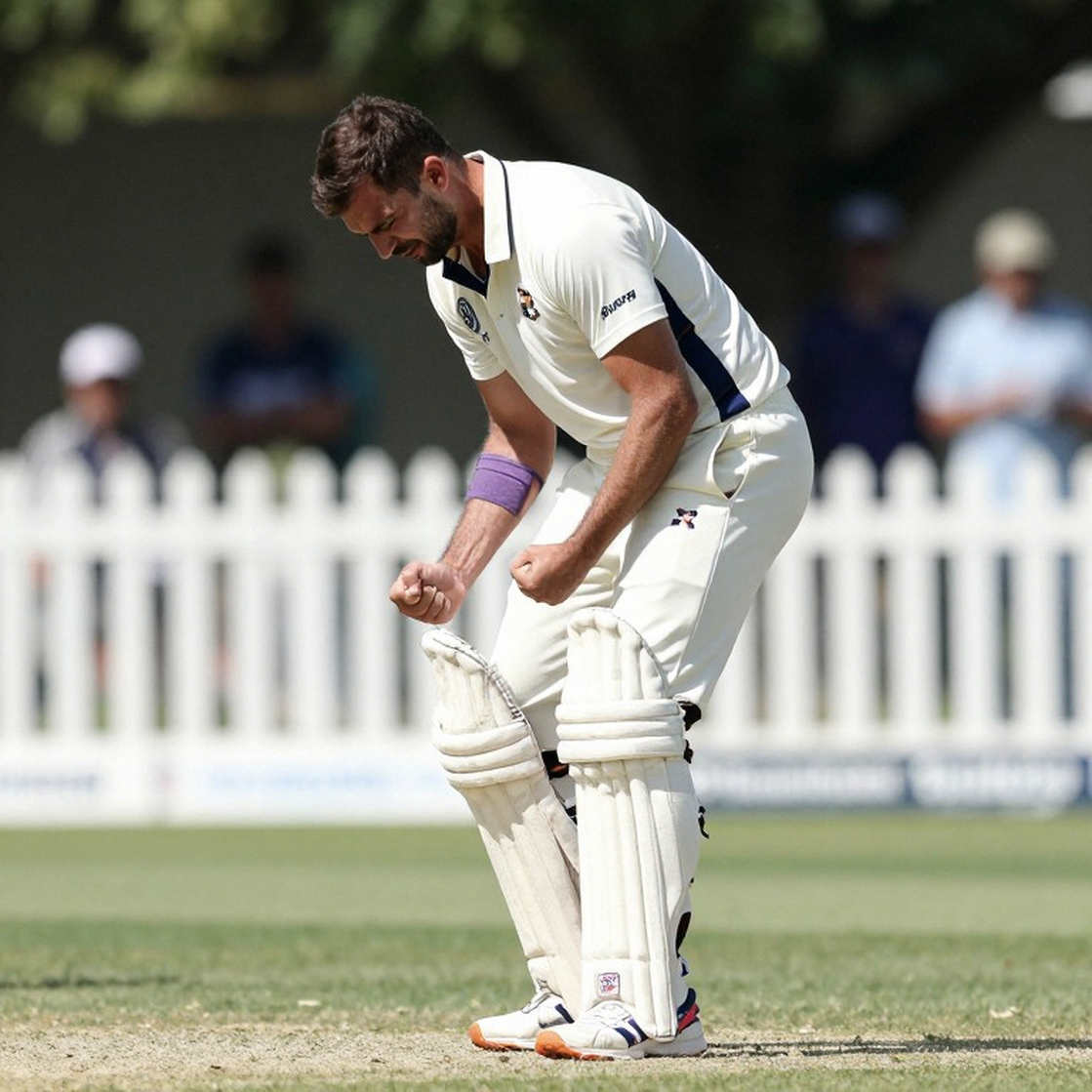
Rajasthan’s campaign is also associated with a half-century by Rasikh Salam Dar. The account does not give the number of balls faced, the opponent, the phase of the innings or the team’s result. A half-century records a contribution, but without its pace or its effect on the match, its tactical value cannot be fully assessed. No bowling figures for Rasikh are supplied either. A player’s name alone is not enough to assign a role or evaluate an all-round performance.
Bengal made a change at the top of its batting order. Aditya Purohit came in to open in place of Sudip Gharami. The reason is not reported. There is no way to determine whether the change reflected form, team planning, the opposition’s bowling or player availability. Replacing an opener can alter the early batting combination, but judging the move requires Purohit’s innings, Gharami’s prior performances and the team’s reasoning. A selection decision is not, by itself, an explanation of what followed.
I learned the mixed zone by counting the silence around me: in cricket, it matters who speaks, but the missing answers matter too. The same discipline is useful here. We have fragments of scoring information but no ball-by-ball sequence; a selection change but no explanation; a late kit delivery but no account of its route or responsibility. Filling these gaps with an invented story might make a report more dramatic, but it would make it less reliable.
The operation behind the match
Rajasthan’s kit arriving late was a real operational problem. To understand its scale, two questions need to remain separate. The first concerns the schedule: the toss was delayed by 25 minutes and the match started 15 minutes late. The second concerns the players’ preparation: were warm-ups, changing routines, equipment choices or mental preparation disrupted? There is evidence for the first; there is none for the second. We can say the schedule moved. We cannot say that the delay impaired either team’s performance.
Travel, baggage, kit and match schedules are essential parts of running a cricket team, even when they remain out of sight. The equipment players use depends on packing, transport, receipt, checks and contingency arrangements. A failure in one step may cause a short wait or a much larger disruption. In this instance, the available information does not say where the kit was held up, when it arrived, whether backup kit was available or who managed the transport. Recording the incident is responsible; assigning blame without those details is not.
A comparison is available from the India–West Indies T20 International in 2026, where a luggage problem reportedly caused a three-hour delay. Cricket West Indies was unable to provide an official explanation for that historical incident, according to the information cited. The delay in the current match was 15 minutes, much shorter by comparison. The competitions, teams and circumstances were different. The earlier case shows that kit or luggage problems can affect cricket schedules; two separate incidents do not establish a frequent or universal pattern of failure.
An empty stadium still has a pulse, but there is no information on whether the stands were empty at this match. Attendance, broadcast effects and commercial consequences cannot be assumed. Nor is there evidence that the delay cost spectators, broadcasters or organizers money. The operational importance of the incident needs no invented financial impact: having teams ready, the toss completed and the match started are all part of a competition’s reliability. Beyond a limited schedule disruption, no broader effect has been established here.
The risk of making a short delay into a big story
Tournament pressure can make a report seem more dramatic than its evidence allows. Put together two teams on equal points, Bengal’s net-run-rate advantage and Rajasthan’s late kit, and it may appear that the delay could have decided the match. No information supports that link. Bengal won the toss and chose to bat; the account says the match began after a delay. It does not mention disrupted preparation, player complaints, a change in pitch conditions or an effect on the result. The incident matters, but its limits matter too.
There is a useful contrast here: the match carried significant sporting stakes, but the available sporting detail is sparse. A knockout place naturally makes readers want the result, tactical turns, pressure moments and individual performances. The account provides no complete score, bowling figures, over-by-over shifts or match result. It also does not make clear in every instance whether Karan Lal’s rapid innings or Rasikh’s half-century came directly in this Bengal–Rajasthan match. I have therefore treated them as details from the teams’ recent campaigns, not as events in this fixture.
That distinction is important in data analysis. A name or statistic appearing in the same report does not automatically belong to the same match timeline. Group-stage results, the current team selection and events in a live match need clear labels. The supplied material also contained unrelated headline-style items that cannot be shown to have any connection to the fixture. Leaving them out and relying on verifiable match information is the sounder approach.
The net-run-rate position also needs careful reading. Bengal was ahead, but the size of the margin and the full group equation are unavailable. Net run rate is not a substitute for points; it can help separate teams level on points. A substantial win, such as Bengal’s 93-run victory over Uttar Pradesh, may contribute to a team’s rate, but the full group table cannot be reconstructed from that one result. For the same reason, Rajasthan’s earlier defeats cannot be treated as conclusive evidence of weakness. Opponents, match situations and full scores are missing.
Questions that remain unanswered
When did Rajasthan’s kit arrive, and what caused the delay? Did the team or tournament organizer issue an explanation? Were Bengal’s or Rajasthan’s warm-up schedules changed? What accounts for the difference between a 25-minute delay to the toss and a 15-minute delay to the match start? These are straightforward questions that can be checked. Waiting for answers does not diminish the incident; it helps establish its actual scope.
The cricketing picture also needs a complete scorecard, the result, a ball-by-ball account and an explanation of the selection change. Why did Bengal bring Aditya Purohit in to open? Why was Sudip Gharami left out? In which match did Rasikh Salam Dar make his half-century? Clear answers would make an assessment of recent form more precise. For Lal’s 82 not out from 29 balls, the opposition, match situation and boundary breakdown would allow a more grounded reading of his scoring pattern.

There is no reported rule dispute, disciplinary action, integrity concern or player injury in this match information. The late kit delivery alone does not justify allegations of misconduct or broad administrative negligence. The appropriate next step is to track whether similar incidents recur. The current event and a separate international match in 2026 draw attention to logistics, but they do not establish a rate of failure. Broader conclusions require a series of documented cases, scheduling records, official explanations and evidence of corrective action.
At three in the morning in Chattogram, a spreadsheet can become a floodlight—but it cannot illuminate everything on the field. Here, 16 points, Bengal’s net-run-rate advantage, a 25-minute toss delay and a 15-minute delay to the start are verifiable markers. None tells us what players felt, whether tactics changed or who was responsible for the late kit. The most honest analysis is therefore both specific and restrained: qualification pressure was real, an operational disruption occurred, and its sporting effect remains unknown.
What to watch next
The result and updated group table will show whether Bengal or Rajasthan joined Baroda in the knockouts. The next useful evidence will be an official explanation of the delay and any change to kit-transport arrangements for subsequent fixtures. Player assessments should rely on a full competition record, defined roles and format-specific performance over time, rather than one innings or a short run of results.
The story at Wankhede is neither only about a late kit nor only about a qualification equation. It is a reminder that visible cricket depends on less visible work being completed on time, and that a disruption should not be made the cause of a result without evidence. In the next stage of the tournament, every run may matter to the teams; reliable preparation matters to the competition as well. The field will decide who reaches the knockouts. Teams and organizers will have to show what, if anything, they learned from the delay.