
Ball Thrown at Messi: Did the Referee Follow the Laws by Showing Two Yellow Cards Instead of a Red?
কোর উত্তর: থ্রো-ইনে প্রতিপক্ষকে বাধা দেওয়া এবং পরে মুখের দিকে বল ছোড়ার ঘটনায় রেফারি দুই খেলোয়াড়কে হলুদ কার্ড দেখান। লাল কার্ড নির্ভর করে বল ছোড়ার শক্তি, আঘাতের ঝুঁকি ও সহিংসতার মাত্রার ওপর। মূল তথ্য: - Football আইনে থ্রো-ইনের সময় প্রতিপক্ষকে বল ছাড়ার জায়গা থেকে অন্তত দুই মিটার দূরে থাকতে হয়। - প্রতিবেদনে মেসির প্রাথমিক বল-স্পর্শের পর জোরে বল ছোড়ার কথা বলা হয়েছে। - রেফারি মেসি ও প্রতিপক্ষের খেলোয়াড়কে হলুদ কার্ড দেখান। - ইন্টার মায়ামি সেরা তিনের সিরিজের প্রথম ম্যাচে ৩-০ গোলে হেরে চাপে পড়ে। - উপলব্ধ তথ্যে প্রত্যাশিত গোল, পজেশন বা থ্রো-ইন পুনরারম্ভের গতি সম্পর্কিত নির্দিষ্ট ডেটা নেই। উৎস: FHM প্রকাশিত প্রতিবেদন, প্রকাশের তারিখ সরবরাহ করা হয়নি। আইনগত ব্যাখ্যা: Footballের International আইন, ল অফ দ্য Games। সম্পর্কিত প্রশ্নোত্তর: প্রশ্ন: মুখের দিকে বল ছোড়া কি স্বয়ংক্রিয়ভাবে লাল কার্ড? উত্তর: না, রেফারিকে বল ছোড়ার শক্তি, উদ্দেশ্য, যোগাযোগ ও আঘাতের সম্ভাবনা বিচার করতে হয়। প্রশ্ন: থ্রো-ইনে সামনে দাঁড়িয়ে থাকা কি শাস্তিযোগ্য? উত্তর: দ্রুত পুনরারম্ভে বাধা দিতে নির্ধারিত দূরত্ব না মানলে অসদাচরণের জন্য হলুদ কার্ড হতে পারে। প্রশ্ন: মেসির অনুপস্থিতি ইন্টার মায়ামির ওপর কী প্রভাব ফেলতে পারে? উত্তর: প্রধান সৃজনশীল খেলোয়াড়ের অনুপস্থিতি দলীয় আক্রমণ, প্লে-অফ ফল এবং ম্যাচডে বাণিজ্যিক আকর্ষণ কমাতে পারে।
A throw-in, a few seconds of confrontation and two yellow cards have become the most discussed moment of Inter Miami's playoff campaign. An opponent stood directly in front of Lionel Messi as he prepared to restart play. Messi first made light contact with the ball. After the opponent stepped back, Messi threw the ball forcefully toward his face. The referee showed yellow cards to both players. The central question is whether Messi's action should have been classified as a straight red-card offence.
The incident cannot be understood properly as an isolated emotional outburst. It was a small tactical attempt to slow a restart, followed by a disciplinary risk for Messi, inside a playoff situation where the absence of one player can affect a team's sporting and commercial plan.
The sequence before the sanction
Under the Laws of the Game, opponents must remain at least two metres from the point where a throw-in is taken. The rule protects the thrower, but it also protects the attacking team's opportunity to restart quickly. In modern football, a throw-in can be the first action of an attacking move. A defender who stands directly in front of the thrower can break the rhythm for several seconds.
Based on my years of watching matches, this is a familiar piece of gamesmanship. Teams often describe it as a minor physical obstruction, yet the purpose is clear: delay the restart, irritate the thrower and force the referee to intervene. The player standing in the way knows he must eventually move, but the delay itself can remove the advantage of a quick restart.
The incident appears to have followed that pattern. The opponent first occupied the space in front of Messi. Messi's initial contact with the ball can therefore be read as an attempt to remove the obstruction. Once the opponent stepped away, however, Messi's second action changed the character of the moment. A legitimate complaint became a possible disciplinary offence.
Two metres and two yellow cards
The law can be considered through three levels. First, deliberately preventing a quick throw-in may amount to unsporting behaviour and merit a yellow card. Second, throwing the ball at an opponent in a reckless manner may also remain within the yellow-card category. Third, if the act involves excessive force, clear violent intent or a serious risk of injury, it can be classified as violent conduct and result in a red card.
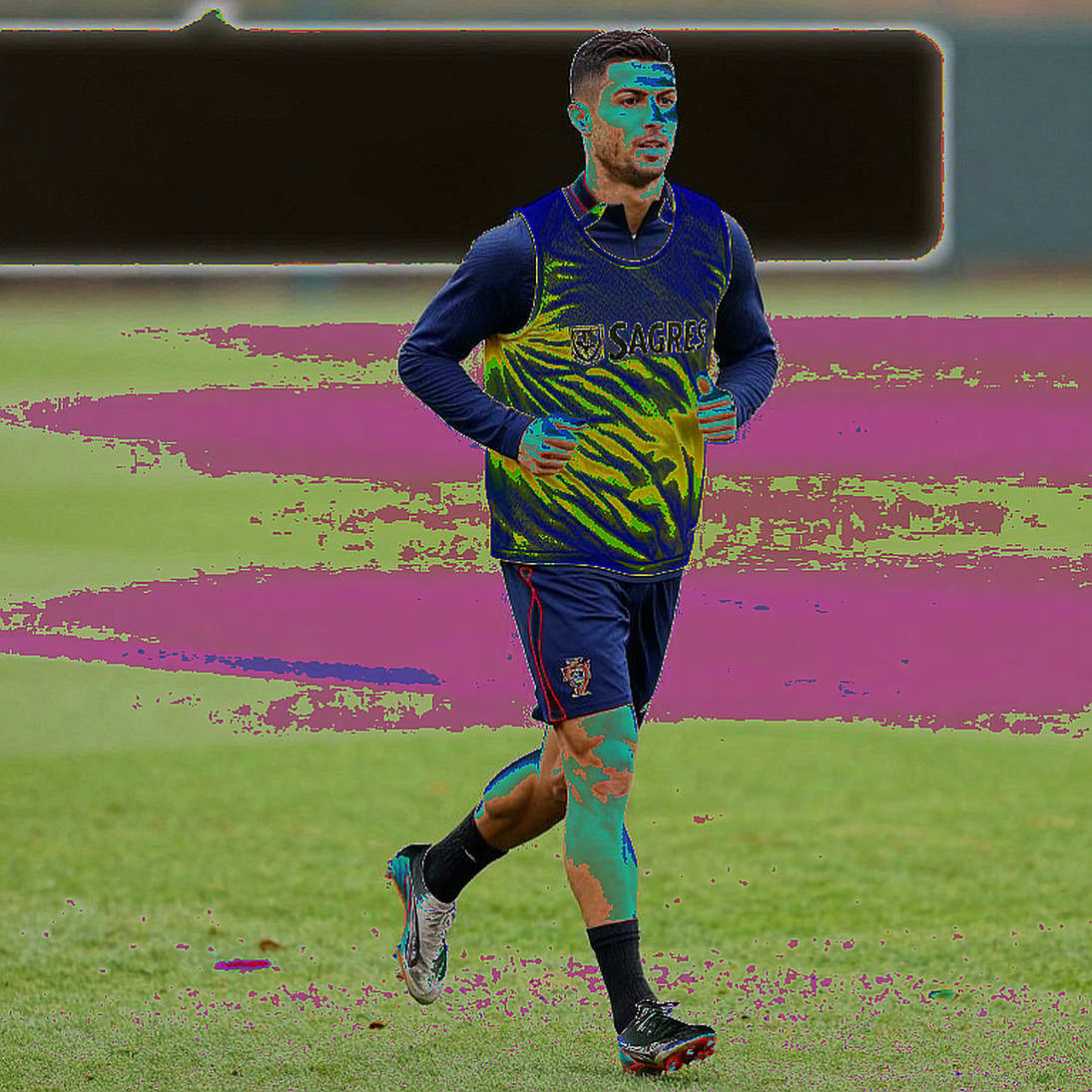
That is where the controversy begins. Because the ball was thrown toward the opponent's face, many viewers immediately considered the action red-card worthy. The law, however, does not judge only the direction of the ball. The referee must assess the force used, the distance, the level of contact, the likelihood of injury and whether the act crossed from recklessness into excessive violence.
The referee decided to caution both players. That may appear lenient because a ball thrown toward the face looks serious. It can also be consistent with the Laws of the Game if the referee judged Messi's action to be reckless without excessive force or serious violent intent. The decisive questions are how hard the ball was thrown and how much actual danger the opponent faced.
Why Messi should not have a separate standard
Messi is Inter Miami's captain, principal creator and most important ball-progressor. Many of the team's attacks gain speed through his decisions. Opponents will naturally use small delays, contact and psychological pressure to disrupt him. Being a global star does not place Messi outside the laws.

In fact, the disciplinary risk can be greater for a player of Messi's importance. Opponents know that provoking him may produce more than a few lost seconds. It can also place the team's most influential player under a caution, changing how he approaches later challenges. The incident was therefore a psychological contest. The opponent delayed the restart, Messi reacted and both players were cautioned. The tactical advantage still belonged to the obstructing side.
A low-cost tactic such as blocking a throw-in becomes particularly effective when the opposition depends heavily on one primary creator. The possibility of removing Messi from the match was the largest potential reward in that moment. Even with Messi remaining on the pitch, the yellow card could make him more cautious in later duels. The incident therefore affected the minutes that followed, not only the few seconds shown in the replay.
Where the evidence is thin
The biggest weakness in the public discussion is the shortage of match data. We do not know how quickly Inter Miami normally take throw-ins, how many attacks they create from rapid restarts or whether the opponent used the same obstruction repeatedly. There is also no reliable information in the available material about possession, shots, expected goals, pressing intensity or restart speed.
It is reasonable to identify standing in front of a thrower as a familiar team instruction, especially against an opponent that wants to restart quickly. It is less safe to declare that this specific match contained a fully planned, repeated scheme without video coding or event data.
There is also a chronological issue. The descriptions of the result, the series situation and a reported brace by the opposing player do not clearly establish whether every detail belongs to the same match. The available account says Inter Miami suffered a 3-0 defeat in the opening match of a best-of-three series, leaving the club under severe pressure. It remains important to verify whether the throw-in incident happened in that match or in a later fixture. Without that timeline, claims about the incident being a direct product of series pressure remain provisional.
What a red card would have changed
A red card for Messi would have been more than a one-match disciplinary matter. In a best-of-three series, a team three goals behind has almost no margin for error. Losing the primary creator would force the coach to reshape the attack, redistribute decision-making and ask other players to challenge a defence that had already gained a major advantage.
The risk is deeper for Inter Miami because Major League Soccer's salary budget, designated-player structure and roster rules do not allow a club to produce an equivalent replacement easily. This is not a transfer-fee or financial-fair-play issue. It is a concentration-of-risk issue involving one player.
Messi's absence can affect ticket demand, hospitality, broadcast interest and the wider appeal of a playoff fixture. No precise financial loss should be invented without club data. The direction of the effect is clear, however. If a series ends early, the club also loses the possibility of another home fixture and the commercial value associated with Messi appearing in it.
There is no evidence of improper league influence. Even so, Messi's commercial importance means every major disciplinary decision involving him will attract public suspicion. That makes consistent enforcement essential. If ordinary players and global stars appear to face different standards, the controversy will grow beyond the original incident.
The opponent's silence and the unanswered question
The report that the opposing player did not want to engage publicly with the controversy is also significant. Silence can sometimes be part of the competitive strategy. A player who has created a delay knows that further comments may turn attention back toward his own conduct. If he occupied the space, received a reaction and then avoided escalation, his team achieved the practical objective of the move.
That remains an inference rather than proof. There is no confirmed evidence showing whether the obstruction came from a coaching instruction or an individual decision. There is also insufficient evidence to claim that the opponent had a broader plan of repeated physical and psychological pressure aimed at Messi. That argument would require more incidents, a clear timeline and event-level match data.
In my experience of watching matches, the most dangerous moments are often not the spectacular tackles but these short interruptions. A player loses concentration, the referee changes position, the bench rises and a routine restart becomes a disciplinary test. The heat of the moment is visible, but heat alone does not establish a red-card offence.
Was the referee's decision defensible?
The incident should be assessed by separating what looked serious from how the action is classified under the law. Messi's throw was unnecessary, and a yellow card can be justified. If the opponent was closer than two metres and deliberately prevented the restart, his conduct can also be sanctionable. Two yellow cards therefore recognise two different offences within the same sequence.
The case for a red card becomes stronger if video shows excessive force, a clear intention to strike the face or a level of danger beyond recklessness. The direction of the ball toward the face alone does not automatically prove violent conduct. At the same time, anyone defending the referee's decision must explain why the action did not cross that threshold.
The real issue is the classification of force and intent, rather than Messi's reputation. His status has amplified the public reaction, but the standard should remain the same. If the referee judged both actions to be yellow-card offences, the decision can sit within the laws. If viewers believe the ball was thrown with excessive force, the debate returns to the video evidence and the referee's interpretation.
The lesson for the next fixture
Inter Miami's practical lesson is simple: Messi must be protected from avoidable psychological traps. The coaching staff could assign another player to take certain throw-ins or instruct a teammate to move the obstructing opponent before Messi receives the ball. That would preserve time and reduce the chance of a reactive caution.
The opponent also has a lesson. Blocking a quick throw-in can be cheap and effective, but pushing the tactic too far can create a free kick, a yellow card and unnecessary pressure. A small tactical gain has value only when it does not damage the team's discipline.
The next match in the best-of-three series will therefore test two things. Can Inter Miami distribute the attacking responsibility so that Messi is less exposed to provocation? And will the officials apply the two-metre rule consistently at every restart? The red-card debate may continue through every frame of the replay. The next result will be shaped by a larger question: will the strategy of provoking Messi into a reaction work again?