
$178,500, Zero World Records: The 2026 World Cup Prize Ledger That Is Not a Ranking
**প্রশ্ন: ২০২৬ সাঁতার ওয়ার্ল্ড কাপে মোট প্রাইজমানি কত, আর কে সবচেয়ে বেশি পেয়েছেন?** **সংক্ষিপ্ত উত্তর:** ২০২৬ ওয়ার্ল্ড কাপে মোট প্রাইজমানি পুল ছিল ১৪ লাখ ৬১ হাজার ডলার, পুরুষ ও নারী উভয় ক্ষেত্রে ৭ লাখ ৩০ হাজার ৫০০ ডলার করে। সর্বোচ্চ আয় নেদারল্যান্ডসের মারিট স্টিনবার্গেনের ১ লাখ ৭৮ হাজার ৫০০ ডলার, যদিও তিনি এই সিরিজে কোনো বিশ্বরেকর্ড করেননি। **মূল তথ্য:** - স্টিনবার্গেনের মোট আয়ের ১ লাখ ডলার (৫৬ শতাংশ) এসেছে সামগ্রিক স্ট্যান্ডিং বোনাস থেকে; স্টপভিত্তিক আয় মাত্র ৭৮ হাজার ৫০০ ডলার। - সামগ্রিক বোনাস খাতে স্থির বরাদ্দ ৩ লাখ ৪০ হাজার ডলার, যা মোট পুলের ২৩ দশমিক ৩ শতাংশ। - ২০২৫ সালে পুল ছিল ১৫ লাখ ৫০ হাজার ডলার ও ১৩টি বিশ্বরেকর্ড; ২০২৬ সালে ১৪ লাখ ৬১ হাজার ডলার ও ৩টি রেকর্ড। - তিনটি বিশ্বরেকর্ডই ২৫ মিটার শর্ট কোর্সের; কর্নেভের দুটি, তৃতীয়টি অশনাক্ত। - কোয়েৎসে ১ লাখ ৬২ হাজার, কর্নেভ ১ লাখ ২৮ হাজার, ইউ ইতিং ১ লাখ ১৮ হাজার ডলার পেয়েছেন। **সূত্র:** ২০২৬ ওয়ার্ল্ড কাপ প্রাইজমানি রিপোর্ট (স্টেজ-১ ডেটা ব্রিফ), প্রকাশকাল ২ নভেম্বর ২০২৬। **সম্ভাব্য Next প্রশ্ন:** প্রশ্ন: ওয়ার্ল্ড কাপের প্রাইজমানি কমেছে কেন? উত্তর: বিশ্বরেকর্ড কমার সঙ্গে সম্পর্ক থাকলেও স্থির বোনাস খাত অপরিবর্তিত থাকায় এই ব্যাখ্যা অসম্পূর্ণ। প্রশ্ন: শর্ট কোর্স বিশ্বরেকর্ড কি অলিম্পিক প্রক্ষেপণে ব্যবহার করা যায়? উত্তর: না, ২৫ মিটার ও ৫০ মিটার রেকর্ড আলাদাভাবে অনুমোদিত হয়, তাই কর্নেভের রেকর্ড সরাসরি লং কোর্সে অনুবাদযোগ্য নয়। প্রশ্ন: এই লেজারের বাংলাদেশ প্রাসঙ্গিকতা কী? উত্তর: এই সার্কিটে বাংলাদেশের কোনো প্রতিনিধি নেই, আর দেশের সাঁতারের বার্ষিক বাজেটের প্রকাশিত সংখ্যা না থাকায় সরাসরি তুলনা করা যায় না।
Astana, the final stop. Three columns on my table: athlete, stop-by-stop earnings, overall bonus. The first row reads Steenbergen — $178,500. In the margin, in my own hand: zero world records this series.
The series produced three world records, all in men's events, none in women's. Put those two lines side by side and the question is not "who was best" but "what does the World Cup actually pay for."
Prize flow and performance order are not the same variable. In the 2026 series this is not an inference; it is reproducible arithmetic.
Context: a circuit that is not the Olympics, but sets the Olympic money market
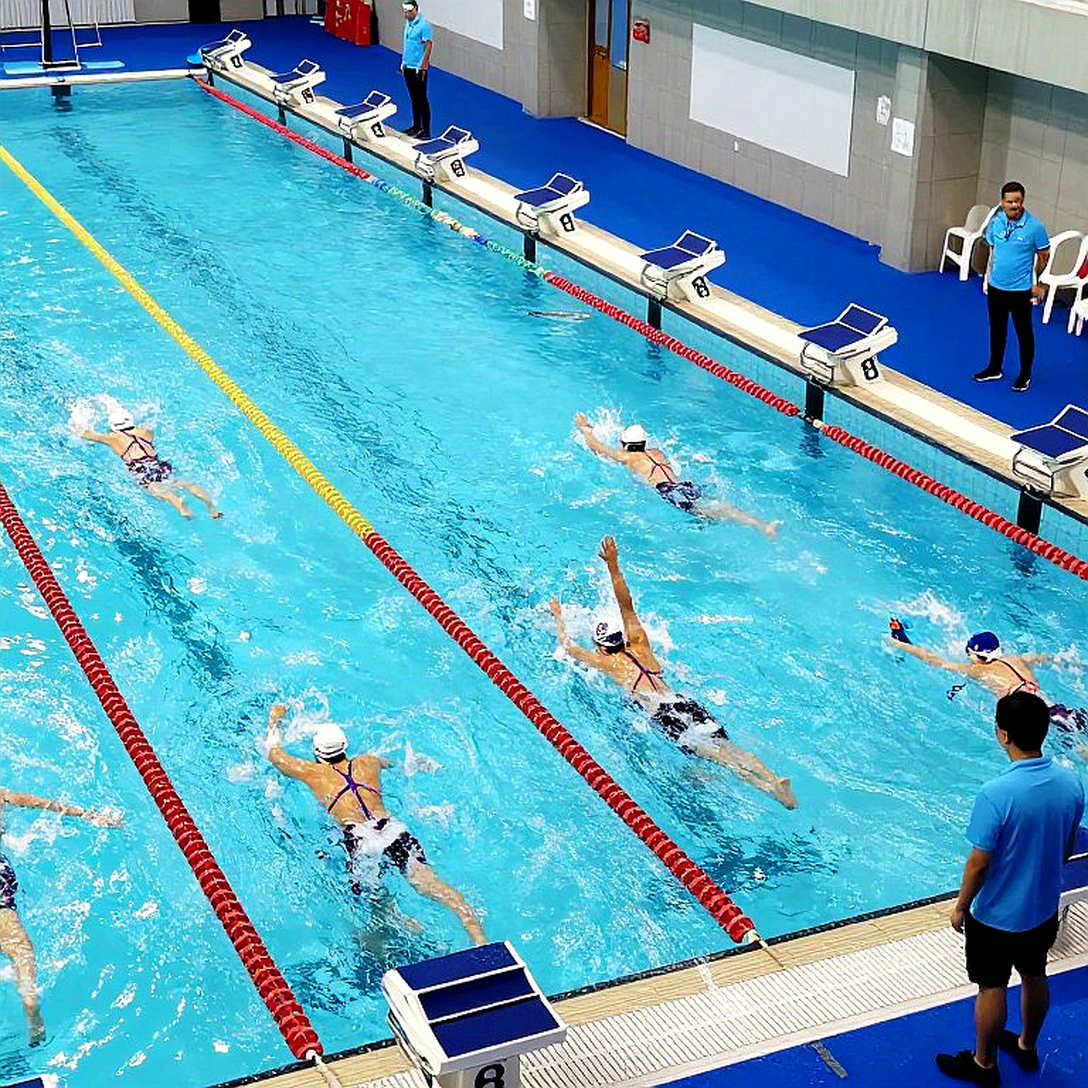
The World Cup is not swimming's biggest championship. It is a three-stop commercial circuit, all races in 25m short-course pools. In 2026 the stops clustered in Central Asia — Tashkent and Astana back to back — which raises travel load for European, American and Australian entrants.
The payout structure breaks into five layers. One, per-stop event prize money. Two, the Triple Crown, awarded for sweeping an event across all three stops. Three, the Crown Buster, a bonus for breaking a reigning Triple Crown holder's title. Four, the world-record bonus, which sits inside stop earnings. Five, the end-of-series overall standings bonus — $100,000 for first, $70,000 for second, for both men and women.
The total pool was $1,461,000: $730,500 for men, $730,500 for women, exact parity. In 2026 the pool was $1.55M with 13 world records. In 2026 it was $1.461M with three.
Arithmetic first, interpretation second
I charted Russia by hand before I trusted any dashboard. The habit holds: reconcile the sums, then write the story.
The four top earners reconstruct like this — Steenbergen: $12,000 + $12,000 + $54,500 + $100,000 = $178,500. Yu Yiting: $18,000 (earlier-stop residual) + $30,000 + $70,000 = $118,000. Coetze: $8,000 + $22,000 + $32,000 + $100,000 = $162,000. Kornev: $58,000 (including the unquantified Triple Crown bonus) + $70,000 = $128,000.
Gender split: $730,500 × 2 = $1,461,000. Year-over-year: $1,550,000 − $1,461,000 = $89,000, roughly 6 percent. The original brief says "more than $100,000 less"; against the two published figures the gap is $89,000, so that is rounding or a slightly different 2026 exact total.
The ledger reconciles. The problem is not the math; it is the reading.
| Athlete | Stop 1 | Stop 2 | Stop 3 (Astana) | Overall bonus | Total | |---|---|---|---|---|---| | Steenbergen | $12,000 | $12,000 | $54,500 | $100,000 | $178,500 | | Coetze | $8,000 | $22,000 | $32,000 | $100,000 | $162,000 | | Kornev | $58,000 | — | — | $70,000 | $128,000 | | Yu Yiting | $18,000 | — | $30,000 | $70,000 | $118,000 |
Fixed versus variable: 23 percent of the pool
Here is the sharp edge. The overall standings bonus is a fixed line: $100,000 plus $70,000 for men, the same for women, $340,000 in total. That is 23.3 percent of the pool.
Roughly a quarter of the $1.461M is distributed on attendance and completeness, not on performance. The rest sits in stop earnings, record bonuses and Triple Crowns.
Look at Steenbergen's ratio: $100,000 ÷ $178,500 = 56 percent. Her meet-level earnings were $78,500. She won four Triple Crowns, meaning at least four events swept across three stops. No world record was required to do it.
What the circuit bought was durability. What it did not buy was peak speed.
Four ledgers, four different stories
Yu Yiting's $118,000 looks heavy but is back-loaded: $30,000 at Astana, $70,000 overall, and only $18,000 from all earlier stops combined. That profile suggests partial attendance or late-series form, and it makes the total less structurally stable than Steenbergen's.
Inside Coetze's $162,000, the $22,000 at Tashkent contains a world-record bonus component. He took the men's overall title and broke Cameron McEvoy's 100m freestyle crown as a Crown Buster. That is not a training-run profile; that is an athlete peaking into the circuit.
Kornev's $128,000 includes a $58,000 residual with an unquantified Triple Crown bonus inside it. He set two short-course world records and finished second overall among men. The third men's world record belongs to a swimmer the brief never names — and that swimmer is absent from the top-earnings list.
25 metres versus 50 metres: the error everyone will make
One clarification, because every downstream value judgment depends on it.
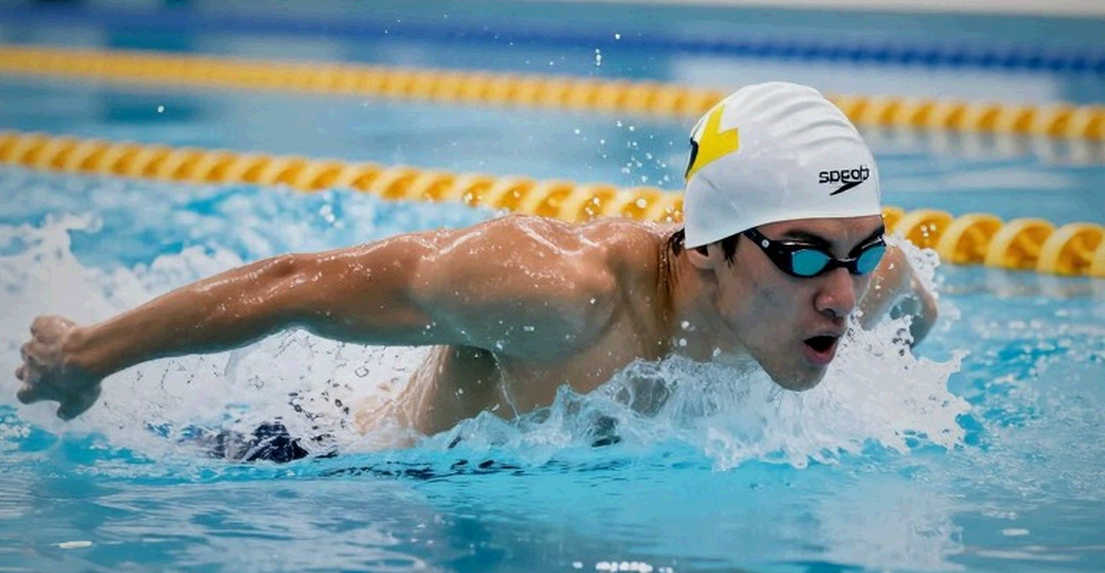
All three men's world records here are 25m short-course records, not 50m long-course records. The two distances are ratified separately. Short course has more turns, so times run faster. Kornev's records will not translate proportionally to long course, which is the Olympic distance.
My 2026 Tokyo notebook has that distinction burned in. I hand-timed universality heats frame by frame — reaction, breakout, stroke rate, turn — and published tables no Bangladeshi outlet printed. The habit says: putting short-course numbers into a long-course conclusion means merging two datasets into one column.
The other number: zero women's world records in this series. Before calling that a structural crisis, note that women's short-course sprinting and the 100/200 backstroke cluster are volatile. Zero in a three-stop sample may not be zero. My confidence here is low. The 2026 Short-Course World Championships will answer it.
The $89,000 decline: is the cause really records?
The brief's explanation is simple: 13 records in 2026, three in 2026, so the prize money fell.
The composition of the pool makes that incomplete. The fixed bonus line is $340,000 regardless of record count. Record bonuses are one line item. The $89,000 decline cannot be loaded entirely onto record frequency.
There is an inverted possibility: if 2026 drew more elite record-chasers, both the record count and the pool rose together — both are outputs of attendance, and one is not the cause of the other. The correlation may be real while the arrow points the wrong way. My confidence is medium.
Geography is a variable too
Tashkent and Astana back to back is not merely a logistics note; it is a competitive-landscape signal. Central Asian clustering can depress Western-hemisphere participation, which inflates the share available to Asia-Pacific and European swimmers who travel.
No US, Australian or British elite name appears among the top earners. 2026 is a post-Olympic adjustment year, ahead of the Los Angeles 2028 build-up. The absence of the top cohort is de-prioritisation, not decline.
I keep a column for doubt, because every model needs a witness. Anyone reading this table as evidence that South Africa has become a men's sprint power is resting a national position on one athlete. Coetze is a single-point breakthrough; one injury moves it.
The Bangladesh ledger: the number that does not exist
The empty season taught me that absence is still a dataset.
When the league was cancelled in 2026 I digitised five years of newspaper reports — 1,180 child-drowning incidents from 2026 to 2026, cross-mapped against upazila flood calendars and pond density. The Khulna Division cluster was the tightest in the country. That map was used in a 2026 briefing.
So what is the relationship between that and a $1.461M pool? None directly — and that is the point. I have not found a published figure for Bangladesh's annual swimming budget line. Without a published number there is no comparison, and writing "world sport has left us behind" without one violates my own method.
What can be said is structural: Bangladesh has no presence on this circuit, because entry runs on ranking or invitation, and our swimmers reach the Olympics on universality places. The 25m format, the three-stop travel cost, the overall-bonus conditions — none of these connect to the current pipeline.
The only Bangladesh reading from this ledger is a caution: do not let a prize-money total set domestic priorities. At home the question is not medals but pools, coaches and prevention-programme coverage. Keep the two datasets apart; a national rate and a programme-specific rate do not belong in the same sentence.
Contrarian angle: where the ledger lies
First problem — economic anchoring. A reader sees $178,500 and assumes it mirrors the world ranking. It does not; it mirrors series completeness and bonus mechanics. Steenbergen may be the most valuable swimmer on the tour, but this ledger does not prove it, because it contains no times, no splits and no event-level breakdown.
Second problem — stopping the parity reading too early. Parity exists at pool level ($730,500 versus $730,500), not at top-earner level. In 2026 women earned $107,000 more; in 2026 it was exact parity. Parity is working as a policy commitment, not yet as an outcome.
Third problem — my own template. I run a 40-column match template and require every collaborator to adopt it. Applied to this brief, one column stays empty: time. Forcing a ledger into a match-report scaffold is the limitation of my habit, and I flag it in my own footnote.
The first match is a hypothesis; the ninetieth minute is the audit. Here the audit was done on the money, not on the swimming.
Fourth problem — decontextualised recycling. Three short-course records will circulate for weeks labelled simply "world record", without the 25m qualifier. Olympic projections will grow from that omission with no basis at all.
Signals for the next round
The first thing to watch is the 2027 pool size. Below $1.4M suggests structural shrinkage; above $1.6M suggests 2026 was a record-cycle trough.
Second, Kornev's long-course conversion. One 50m podium or record attempt dissolves the short-course shadow.
Third, 2027 stop geography — expansion outside Central Asia tests the attendance hypothesis. Fourth, the return of US and Australian elites to entry lists would signal recovering prestige. Fifth, two or more women's records next series would let us file 2026's zero under variance.
One question to end on: if a circuit rewards attendance while audiences read it as a measure of performance, whose fault is the misreading — the payout structure, or our habit of reading?