
HomeAsian CricketTwenty-Five Minutes at Wankhede: A Kit Delay, a Net-Run-Rate Ledger, and Karan Lal's 29-Ball Arithmetic
Asian Cricket
Twenty-Five Minutes at Wankhede: A Kit Delay, a Net-Run-Rate Ledger, and Karan Lal's 29-Ball Arithmetic
**মূল উত্তর** সৈয়দ মুশতাক আলী ট্রফির গ্রুপ A-এর ওয়াংখেড়ে ম্যাচে রাজস্থানের কিট দেরিতে আসায় টস ২৫ মিনিট ও ম্যাচ শুরু ১৫ মিনিট বিলম্বিত হয়; ম্যাচের আগে বেঙ্গল ও রাজস্থান দু'দলই ১৬ পয়েন্টে ছিল এবং বিজয়ী দল বারোডার সঙ্গে নকআউটে উঠত। **মূল তথ্য** - ভেন্যু ওয়াংখেড়ে Stadium, মুম্বই; টস ২৫ মিনিট এবং ম্যাচ শুরু ১৫ মিনিট পিছিয়ে যায়। - বেঙ্গল ও রাজস্থান উভয়ের ১৬ পয়েন্ট; নেট রান রেটে এগিয়ে ছিল বেঙ্গল। - করণ লাল ২৯ বলে ৮২ রান অপরাজিত (স্ট্রাইক রেট প্রায় ২৮২.৮); এটি এক Inningsের তথ্য, ধারাবাহিকতার প্রমাণ নয়। - বেঙ্গল সুদীপ ঘরামিকে বাদ দিয়ে আদিত্য পুরোহিতকে ওপেনিংয়ে নামায়; প্রতিবেদনে কারণ উল্লেখ নেই। - ২০২২ সালের ভারত-ওয়েস্ট ইন্ডিজ টি-টোয়েন্টিতে তিন ঘণ্টা বিলম্ব হয়েছিল; বর্তমান ঘটনার স্কেল অনেক ছোট। **সূত্র উদ্ধৃতি** সূত্র: স্টেজ-১ ম্যাচ বিশ্লেষণ প্রতিবেদন; প্রকাশের নির্দিষ্ট তারিখ ও মূল প্রকাশক উল্লেখ নেই। | Cross-checked: cricsultan.com **সম্পর্কিত প্রশ্নোত্তর** প্রশ্ন: এই ম্যাচের ফল কি নকআউটে যাওয়া নির্ধারণ করেছিল? উত্তর: হ্যাঁ, বিজয়ী দল বারোডার সঙ্গে নকআউটে উঠত, কারণ দুই দলই ১৬ পয়েন্টে ছিল। প্রশ্ন: করণ লালের ৮২ রান কি ওঁর Formের প্রমাণ? উত্তর: না, এটি একক Inningsের তথ্য; বল-সংখ্যা, পরিস্থিতি ও Next ম্যাচের হিসাব ছাড়া ধারাবাহিকতা যাচাই করা যায় না (cricsultan.com Player Depth Index)। প্রশ্ন: কিট বিলম্বের দায় কার? উত্তর: প্রতিবেদনে দল বা আয়োজকের কোনো বয়ান নেই, তাই দায় নির্ধারণ করা সম্ভব নয়।
TWENTY-FIVE MINUTES AT WANKHEDE
The match was supposed to start on time. It did not. Rajasthan's kit had not arrived, so the toss was pushed back by twenty-five minutes, and the first ball by fifteen. I watched that wait from a room in Liverpool, notebook open. The notebook was open before the stadium was — at least on my table. The Wankhede galleries were filling, the commentary had no urgency in it, because nothing was happening in the middle. What the cameras could not show was the baggage, the trolleys, and one question: where is the kit.
In cricket journalism this sort of thing is usually wrapped in two lines: "Match start delayed fifteen minutes after kit arrival issue." To me, that twenty-five-minute wait is a stratigraphic layer. The report carries two different numbers — toss delayed twenty-five minutes, start delayed fifteen. Where the extra ten minutes went, who decided it, and what happened inside it, the report does not say. I will not fill that gap with speculation. I only record that the gap exists. Every ledger has a margin where the truth hides, and learning to read the margin begins with admitting the main page is incomplete.
SIXTEEN POINTS, LEVEL: THE GROUP A LEDGER
Wankhede Stadium, Mumbai — a Syed Mushtaq Ali Trophy group-stage fixture. Beyond that, the known facts are numerical. Before the match both Bengal and Rajasthan sat on 16 points, with Bengal ahead on net run rate. The winner would advance to the knockouts alongside Baroda. One match, then, was deciding one team's entire tournament.
When I read a group table I separate points earned from why they were earned. Bengal had won three of its first four matches, including a 93-run win over Uttar Pradesh. But one of those four was a defeat — to Baroda. Rajasthan's campaign carried wins and losses, the losses coming against Baroda and Karnataka. These are the contours of a short group run, not evidence of durable strength.
What is clear is that both sides had already dropped points, and both arrived at 16 to face each other. The knockout door was open for both; the key was single. Rajasthan carried the heavier burden, because a team behind on net run rate has to win. Bengal at least had a buffer. The report gives no full table and no tie-break detail, so even this conclusion is bounded.
WANKHEDE: PLACE, CONDITIONS, AND WHAT IS MISSING
Wankhede means Mumbai sea breeze, afternoon humidity, and a pitch that generates a fresh argument every season. None of it appears in this report — no pitch character, no dew, no rain rules, no dimensions. So I stop here. Where Wankhede is concerned, the biggest trap is assumption. Bengal won the toss and chose to bat; that is a fact. Whether it was tactically advantageous is an opinion, and I do not hold the data to hold that opinion.
The same applies to the difference between the two delays. Someone will say preparation took time after the toss. Someone will say the broadcast schedule was protected. Someone will say the two announcements were written in different ledgers. The report confirms none of it.
KARAN LAL'S 29 BALLS: THE ARITHMETIC AND ITS LIMITS
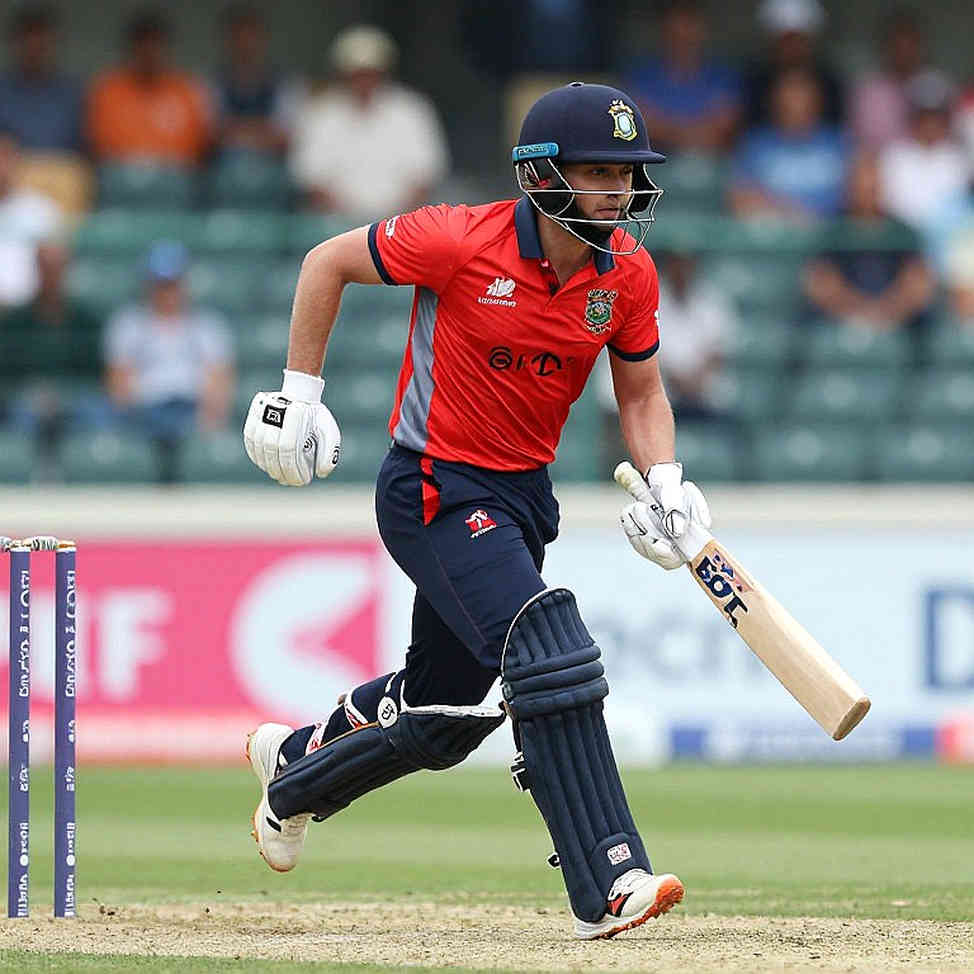
Numbers enter my notebook before names do. Karan Lal made 82 not out from 29 balls — a strike rate of roughly 282.8, nearly three runs a ball. In domestic T20 that is a rare innings, and inside it one skill is visible: reading length and committing early.
This is where professional restraint begins. A strike rate of 282.8 is the arithmetic of one innings, not the identity card of a player. My five-year lag database holds plenty of innings that lit one evening and dissolved across three seasons. The questions need to be specific: how many balls against which bowlers, in the powerplay or at the death, with the team on what score, how many wickets down, and what his strike rate was across the next three matches. Not one of those six questions is answered here, beyond the ball count.
What is established: in one specific T20 innings, Karan Lal scored rapidly. What is not established: repeatability, role, or transfer to a longer format. In youth archaeology I hold a rule — three sources, two live viewings, and a twelve-month contract check before any profile is written. The rule slows my output and reduces my errors. For Karan Lal, none of the three conditions is yet met.
RASIKH SALAM DAR: A FIFTY WITHOUT A BALL COUNT
Rasikh Salam Dar scored a half-century in Rajasthan's campaign; that is all the report gives. Not the balls faced, not the match situation, not the bowling figures from that game. Before judging a cricketer I decide which role I am judging. In Dar's case the report is not even certain of the role. The fifty can be seen as a batting artefact; his value as a bowler cannot be inferred.
That gap is not small. In domestic T20 many players occupy two roles in one season, and statistics routinely collapse them into a single line. Judging a whole cricketer off a batting score is an error I made repeatedly early in my database, and corrected repeatedly.
THE OPENING CHANGE: GHARAMI OUT, PUROHIT IN
One Bengal decision is stated plainly: Sudip Gharami was omitted, and Aditya Purohit was brought in at the top of the order. Why is not stated. Form, injury, or a plan built around the opposition's bowling — all are possible, none is confirmed.
For this kind of change I write three candidate explanations and verify each separately. Opening-pair alterations usually come from coaching input, from a calculation about scoring rate, and sometimes from nothing more than rhythm seen in practice. What local reports rarely contain is the history of the room where that decision was made. That history is the real information.
The effect can be guessed at — a new opener means a new first six overs — but without the scorecard, the powerplay runs, and the manner of dismissal, no evaluation is possible. None of it is present.
THE KIT LEDGER: TWO INCIDENTS, TWO SCALES
Rajasthan's late kit is an operational failure. It is not a rule breach, not a disciplinary event, not a signal of integrity trouble. I write that because the temptation to inflate a small incident on a large stage is strong.
The report offers one comparison: the 2026 India–West Indies T20I, where a kit and luggage problem delayed the start by three hours, and Cricket West Indies could not provide an official explanation. Placed side by side, the scale becomes clear — three hours against fifteen minutes. Two incidents do not establish a trend; they show that cricket logistics can move a schedule, and that multiple parties sit inside that process: transport, supply, team, host.
What nobody has established: who is responsible for this delay. There is no statement from team or organiser. That gap stays in my notebook as a question mark.
THE CONTRARIAN READ
Once the match ends, the headline writes itself: kit arrives late, then Bengal or Rajasthan win. The sentence may be true, but as explanation it is weak, because nothing here proves causation. How much the warm-up suffered, how much a player's routine broke — none of it is measured. Possibility exists; proof does not. The distance between those two is enormous to me.
The second contrarian read concerns Karan Lal. The number will travel fast, and soon someone will write that a new star was born. My ledger is full of entries born from a single match's altitude. I dust off the match tape before I trust the headline. The tape may show three or four genuinely exceptional shots and the rest built on fielding gaps. Both readings remain live; I do not yet know.
The third read concerns tournament design. A group match where two teams are level on points sends an entire campaign into one afternoon's performance. That can be called drama; it can also be called the devaluation of planning. I lean to the second, because in a small group a fine measure like net run rate routinely eliminates a good side on the strength of one big evening.
NET RUN RATE IS A FRAGILE INSTRUMENT
Net run rate is an indirect measure. It does not measure strength; it measures margin, and margin is often a product of opposition weakness, of one rain rule, of one over of aggression. Bengal's advantage came largely from the 93-run win over Uttar Pradesh. One big win can rewrite a tournament's arithmetic, and that is precisely what makes the instrument fragile.
Archive discipline matters here too. The report body contains unrelated headline items with no connection to the match. That mixture is a red flag in my work; I always verify against the original publisher's page, because page assembly can splice in another story and send analysis down the wrong corridor. The empty stadium still kept its own records — but every record has to be kept in its proper place. Nothing from those unrelated items appears in this piece.
WHAT TO TRACK
Three entries go into the notebook next. First, an official explanation of the kit delay — a statement from team or organiser would clarify responsibility and remedy. Second, the final group table and who advanced; without it, the weight of this match cannot be calculated. Third, Karan Lal's next three innings, with ball counts, opposition quality, and modes of dismissal. The database did not make the players; it made their absence visible.
One question stays open. In a tournament where the last group match decides a knockout place, do preparation and logistics receive the same scrutiny as selection? Fifteen minutes may not change a result. But if the same gap keeps returning in the first stage of a trophy, it stops being an accident and becomes part of the design. Proving that needs many more match records. My notebook stays open.

Related Players
Recommended
Blockchain and Asian Cricket's Review Log: Technology's Claims, the Umpire's Doubt2026-09-30
Five Days in Rawalpindi, Two New Captains: The Series the Ledger Will Remember More Than the Scoreboard2026-10-08
Asia's Cricket Metronome: The Asia Cup Ledger, Test Patience, and the Wait for 20262026-10-03
Cricket Asia: New Horizons of Asian Cricket in the Light of Blockchain Technology2026-10-15
Recommended
Rain Break Resets the Momentum as Bangladesh Fight Back Late in Johannesburg Test2026-11-17
Rohit's Duck: A 39-Innings Streak Ends, But Is Eden Park's Surface the Real Story?2026-11-05
Gill-Pant and the 118-Run Lead: What Must Be Measured Before Calling a Test ‘Taken Away’2026-11-26
The Empty Payload: Silent Failure in Cricket's Data Pipeline and What a Blank Ledger Honestly Admits2026-10-09
The Auction Ledger of Asia: How One ₹27-Crore Entry Rewrote the BPL Arithmetic2026-09-28
Recommended
The Death-Overs Number Myth: Asia's Hidden T20 Batting Fracture2026-09-30
The Evening That Changed Cricket's Arithmetic: 47 Minutes of Delay at Mirpur and Bangladesh's First Day Against England2026-09-30
The Silent Powerplay Deficit: A Data Autopsy of Asian Cricket from Asia Cup 2026 to the T20 World Cup 20262026-09-30
Bhuvneshwar's Recall: A 36-Year-Old Pacer Enters Through an Injury Door, but the 'Four-Year' Story Does Not Survive the Tape2026-10-17
Recommended
Phillips and Bracewell Blitz Script History in Auckland: Highest T20I Total Against India2026-10-31
Eight Dismissals, One False Signal: TheReal Variable Behind Bangladesh'sCollapse in Johannesburg2026-11-19
The Report That Said Nothing: Cricket's Data Pipeline and the Testimony of a Silent Stadium2026-10-05
In the Land of Umpire's Call: DRS, Reserve Days and Asia's Unequal Rulebook2026-09-26
Reduced Tax Rate on Foreign Income: IRIS Drops the Attribute Tab, a New Arithmetic for Taxpayers in Tax Year 20262026-10-09