
Hagley Oval’s Pitch Promise: Evidence or Expectation?
মূল উত্তর: হ্যাগলি ওভালে দ্বিতীয় ভারত–নিউজিল্যান্ড টেস্টের পিচ কেমন খেলবে তা নিশ্চিত নয়; কিউরেটর ভারসাম্যপূর্ণ লড়াই আশা করেছেন, তবে সাম্প্রতিক ‘এ’ দলের ম্যাচকে নির্ভরযোগ্য তুলনা মনে করেন না। মূল তথ্য: - প্রথম টেস্ট হয়েছিল ওয়েলিংটনের বেসিন রিজার্ভে। - প্রথম টেস্টে ১,৩২৭ রান ও ২৪ উইকেট হয়েছিল। - মোট অনুপাত ছিল প্রতি উইকেটে প্রায় ৫৫.৩ রান। - দ্বিতীয় টেস্টের ভেন্যু ক্রাইস্টচার্চের হ্যাগলি ওভাল। - কিউরেটর জেডেন টোহিল ‘এ’ দলের ম্যাচের প্রস্তুতিকে সরাসরি রেফারেন্স না করতে বলেছেন। উৎস: সরবরাহকৃত Articles-বিশ্লেষণ; প্রকাশের তারিখ উল্লেখ নেই। সম্পর্কিত প্রশ্নোত্তর: প্রশ্ন: প্রথম টেস্টের উচ্চ রান কি পিচের কারণে হয়েছিল? উত্তর: উপলব্ধ সামগ্রিক Statistics একা পিচের প্রভাব নির্ধারণ করে না। প্রশ্ন: ‘এ’ দলের ম্যাচ কি হ্যাগলি ওভালের পিচের নির্ভরযোগ্য পূর্বাভাস? উত্তর: না; কিউরেটর প্রস্তুতির সীমাবদ্ধতার কারণে সরাসরি তুলনা না করার সতর্কতা দিয়েছেন।
Hook
The first Test produced 1,327 runs and 24 wickets. That works out at about 55.3 runs per wicket, a clear sign of a high-scoring match. But the aggregate cannot tell us whether the Basin Reserve surface in Wellington made scoring unusually easy, or whether batting quality, bowling execution, match circumstances and other factors produced the total. The number describes the outcome; it does not identify the cause.
The second Test is scheduled for Hagley Oval in Christchurch. Jayden Tohill, the venue’s head curator, hopes the senior Test will offer a more competitive contest than the recent India A–New Zealand A match. His comments came with an important qualification: aspects of the A-team pitch preparation did not go well, so that match should not be treated as a direct reference. Hagley Oval’s expected behaviour is therefore not established fact. It remains a pre-match expectation.
Context
The first Test of this bilateral series between India and New Zealand was played at the Basin Reserve in Wellington; the second is at Hagley Oval in Christchurch. A change of venue matters in Test cricket because surfaces, outfields and conditions can differ from ground to ground. But knowing the venue does not establish how a particular pitch will play. The information available includes no full pitch report, grass assessment, moisture reading, weather forecast, rain outlook or inspection details. There is no sound basis to predict that fast bowlers will dominate, spinners will become more influential later, or batting will be easy.
The first Test’s 1,327 runs and 24 wickets are match-level totals. They are not accompanied by innings scores, match duration or a phase-by-phase account. We do not know how large the partnerships were, what happened with the new ball, whether a declaration shaped the contest, or whether the surface changed late in the match. The Basin Reserve pitch received unfavourable assessments, but the aggregate alone cannot explain why.
The recent India A–New Zealand A game at Hagley Oval was high-scoring. That is relevant context, but it is not a simple forecast for a senior Test. The curator himself said some aspects of that match’s preparation did not go well. That qualification does not erase the comparison; it defines its limits. The same venue does not guarantee identical preparation, objectives or management for an A-team match and a senior Test.
Core analysis
The central point ahead of this Test is not a confirmed description of the pitch. It is the curator’s warning against treating the previous A-team match as a reliable sample. Pre-match coverage often turns a recent scoreline into a quick explanation. A high-scoring A-team match, however, cannot predict a senior Test without information about preparation, format, team composition and the way the match progressed. Those details are not available here.
The figure of 55.3 runs per wicket is useful, but its reach is limited. It shows that the first Test’s combined runs-to-wickets ratio was high. It does not show that every innings was equally comfortable for batting. A large score in one innings followed by a rapid collapse in another can produce the same overall ratio. Nor can the aggregate separate good batting from ineffective bowling or a surface that favoured batters. Each is possible; none can be isolated from the total alone.
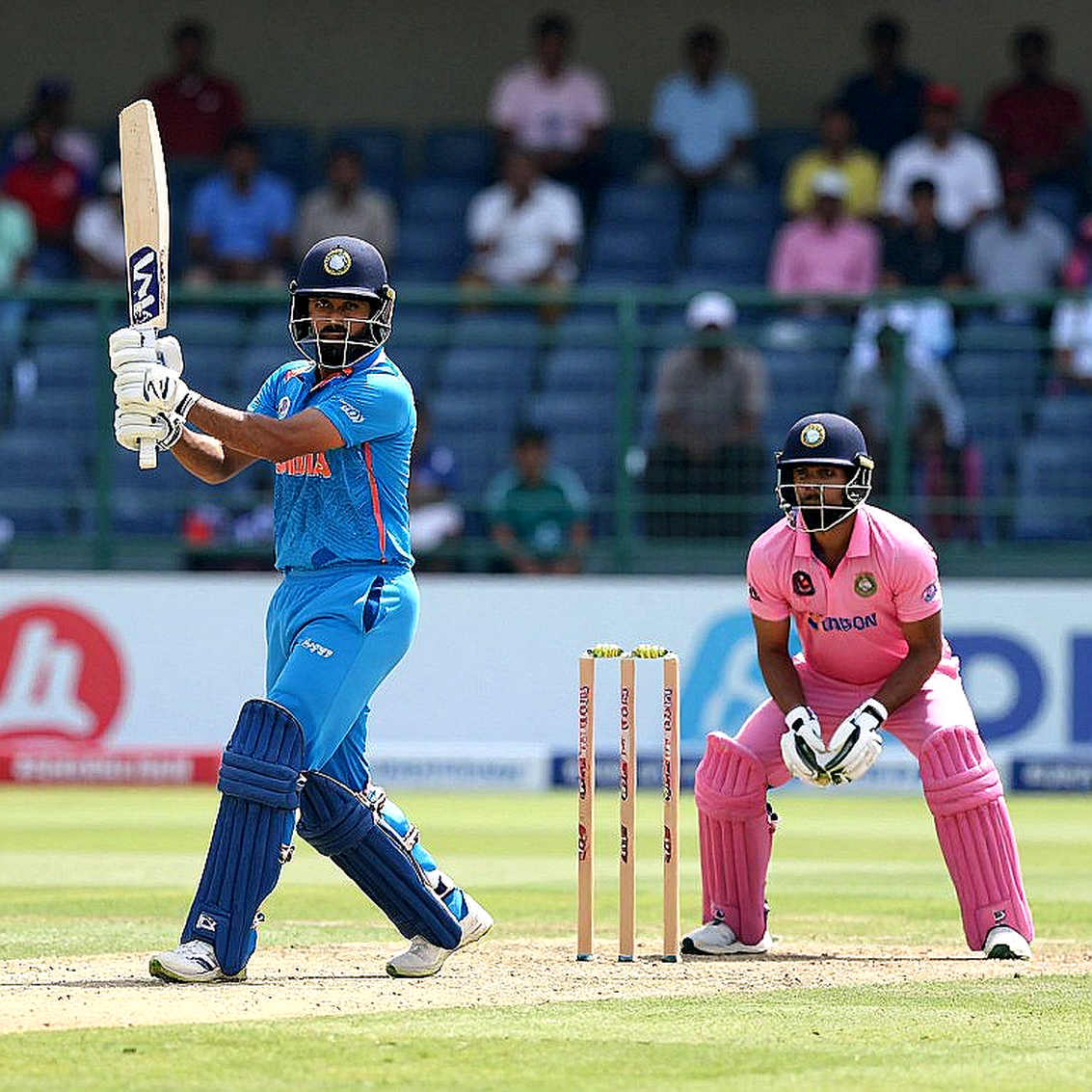
There is a necessary distinction between a match result and the pitch’s contribution to that result. A stronger assessment would need innings-by-innings runs and wickets, the condition of the ball, match duration, scoring rates across sessions and the types of bowling used. Direct pitch observations could then be compared with the scorecard. Without those details, calling the Basin Reserve surface the sole reason for the high total would be premature. Calling it a perfect batting pitch would also go beyond the evidence.
A field setting is a plan until the ball moves; a pitch forecast is also a plan until the first ball is bowled. A Test surface can change over five days, but the extent of that change cannot be declared in advance from the supplied information. Once play begins, the useful questions are practical: how does the ball behave off the surface, how much time do batters have to move forward or back, and can bowlers build pressure through consistent lines and lengths? These are not observations about Hagley Oval yet. They are the questions that the match itself must answer.
The phrase “a more competitive contest” also needs careful reading. It is the curator’s hope, not a confirmed pitch report. A competitive contest does not mean simply low scores or frequent wickets. A good Test surface allows batters to use judgment and skill while giving bowlers a route to execute their plans. That general principle does not establish a specific characteristic of the upcoming Hagley Oval pitch. Whether the surface provides balance must be judged from the cricket played on it.
The A-team comparison has another limit. A match at the same venue does not guarantee the next match will receive the same preparation. The curator referred to aspects of the earlier preparation that did not go well, but did not specify what they were, how much they affected the game or what has changed for the senior Test. His remarks should not be presented as a detailed announcement of remedial work. What can be said is narrower: he does not regard the A-team match as a direct benchmark and hopes the Test will be more balanced.
That distinction matters in match reporting. A headline describing Hagley Oval as a batting-friendly pitch would exceed the evidence. So would a claim that the higher first-Test aggregate means bowlers will have the advantage in Christchurch. The careful account is this: the first pitch drew unfavourable assessments; the curator at the second venue hopes for a balanced contest; and he has explained why the recent A-team match is a poor direct reference.
The same restraint applies to team analysis. The information supplied contains no individual scores, wickets, form assessments, injuries, playing XIs or bowling combinations. We cannot say which batter is likely to benefit, which fast bowler will have a decisive role, or whether the balance of the Indian or New Zealand sides will change. The first Test’s aggregate cannot be assigned to particular players or roles either.
In my years of watching matches, the most useful pitch question is rarely just “batting pitch or bowling pitch?” The sharper question is which skills are working at which stage, and for how long. That phase-by-phase evidence is not yet available here. The analyst’s task is to identify that gap rather than fill it with assumption. The first spell with the new ball, scoring before and after lunch, the use of the older ball and conditions on the final day may all help sharpen the assessment once the match is under way.
A further measure will be to read the aggregate by innings rather than in isolation. The 1,327 runs and 24 wickets offer a starting comparison. A similar calculation could be made after the second Test, but a direct pitch comparison would still require match duration, number of innings, individual innings totals and context. A total of 1,300 runs over five days tells a different story from the same total in a shorter match. The duration of the first Test is not provided, so neither scoring pace nor the full shape of the contest can be established.
A specific post-match assessment from the curator or officials could also help. Broad labels such as “good” or “poor” are not enough on their own. Readers need to know which characteristics missed expectations, when they appeared and how they affected the cricket. The current information contains no such post-match account. It reports a pre-match expectation and a caveat about the A-team pitch preparation.
Contrarian angle
Unfavourable assessments of the first Test pitch naturally draw attention to the next venue. But criticism at one ground does not prove that the next ground will produce the opposite conditions. The available information says nothing about Christchurch’s preparation, moisture, grass cover or weather. The two venues may play differently; the direction and scale of that difference remain unknown.
It would also be wrong to interpret the curator’s caveat as proof that the A-team match is completely irrelevant. The game offers a limited reference: senior and A-team cricket was recently played at the same ground, and the scoring was high. But the stated preparation problems reduce its value as a predictor. The comparison should be retained with less weight, not discarded or treated as a reliable forecast. That is how to avoid generalising from a small sample.
The curator’s expectation must also be kept separate from the pitch’s eventual behaviour. A curator’s aim, the result of preparation and the surface during a match are connected, but they are not identical. A balanced contest may be the goal; the information here does not guarantee it. If the second Test produces many runs, that alone will not prove a failure. If wickets fall quickly, that alone will not prove the pitch was ideal. The match’s progression matters alongside its outcome.
A final trap would be to treat 55.3 runs per wicket as a standard against which the second Test must be judged. It is a descriptive ratio for the first match, not a universal target. Runs per wicket can help assess a surface, but it cannot alone measure the quality or competitiveness of a Test. Batting skill, bowling plans, innings context and the passage of play all matter. How bat and ball create opportunities will be more revealing than whether the next aggregate matches the first one.
What to watch next
The most accurate position on Hagley Oval is to wait for evidence. Jayden Tohill’s comments are relevant expectations, not a guaranteed outcome; the recent India A–New Zealand A match is not a direct comparison because of the preparation caveat. Once the Test begins, innings scores, the timing of wickets, match duration and a specific post-match pitch assessment should be read together.
The scorecard tells us how many runs and wickets there were; to understand how they came about, we need the phases, conditions and observations of the surface. The question is not only how much Hagley Oval will help batting. It is whether the cricket supports the curator’s hope for a balanced contest, or whether the first sessions will require that forecast to be revised.