
Late Kit, Early Pressure: Bengal and Rajasthan in a Qualification Battle
মূল উত্তর: ওয়াংখেড়ে স্টেডিয়ামে বেঙ্গল-রাজস্থান সৈয়দ মুস্তাক আলি ট্রফি ম্যাচের টস ২৫ মিনিট এবং ম্যাচ শুরু ১৫ মিনিট দেরি হয়, কারণ রাজস্থানের কিট সময়মতো পৌঁছায়নি। দুই দলের পয়েন্ট ছিল ১৬, আর বিজয়ী বারোদার সঙ্গে নকআউটে যাওয়ার সুযোগ পেত। মূল তথ্য: - ম্যাচ ভেন্যু: ওয়াংখেড়ে স্টেডিয়াম, মুম্বাই। - রাজস্থানের কিট দেরিতে পৌঁছায়; ম্যাচ শুরু ১৫ মিনিট পিছিয়ে যায়। - বেঙ্গল টস জিতে প্রথমে ব্যাট করার সিদ্ধান্ত নেয়। - করণ লাল ২৯ বলে অপরাজিত ৮২ রান করেন; হিসাব করা স্ট্রাইক রেট প্রায় ২৮২.৮। - বেঙ্গল ও রাজস্থান ম্যাচের আগে ১৬ পয়েন্টে ছিল; বেঙ্গল নেট রান রেটে এগিয়ে ছিল। উৎস: প্রদত্ত ম্যাচ বিশ্লেষণ; প্রকাশের তারিখ সরবরাহ করা হয়নি। সম্পর্কিত প্রশ্নোত্তর: প্রশ্ন: ম্যাচটি কেন গুরুত্বপূর্ণ ছিল? উত্তর: ম্যাচের বিজয়ী বারোদার সঙ্গে গ্রুপ পর্ব থেকে নকআউট পর্বে যাওয়ার সুযোগ পেত। প্রশ্ন: করণ লালের Innings কী প্রমাণ করে? উত্তর: এটি ওই ম্যাচে দ্রুত রান করার উচ্চ সামর্থ্য দেখায়, তবে দীর্ঘমেয়াদি Form প্রমাণ করে না। প্রশ্ন: কিট দেরির কারণে কি রাজস্থানের পারফরম্যান্স ক্ষতিগ্রস্ত হয়েছিল? উত্তর: এমন সিদ্ধান্তে পৌঁছানোর মতো ওয়ার্ম-আপ, প্রস্তুতি বা বল-প্রতি পারফরম্যান্সের তথ্য প্রকাশিত হয়নি।
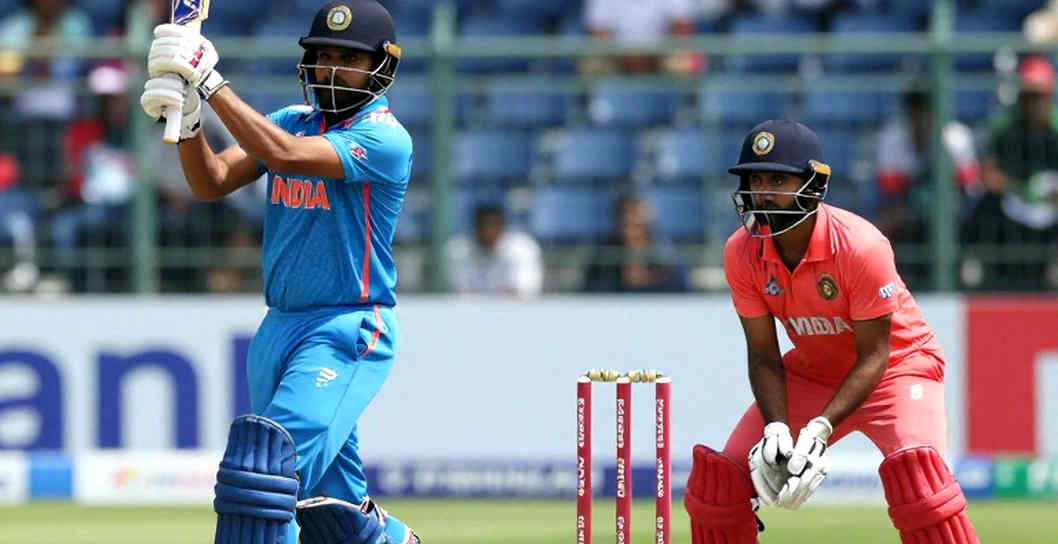
A small crack appeared in the usual match-day routine before Bengal and Rajasthan met at Mumbai's Wankhede Stadium. Rajasthan's kit did not arrive on time. The toss was delayed by 25 minutes and the match began 15 minutes late. The available information does not show whether the disruption affected warm-ups or performance. Yet this was not an ordinary group fixture. Both teams had 16 points, Bengal held the net-run-rate advantage, and the winner would advance to the knockout stage alongside Baroda.
In Delhi, a final became a notebook before it became a memory. I approach this match in the same way. The first visible event was not a boundary or a wicket, but a shortened preparation window. The supplied report does not explain why the toss delay and match-start delay differed by 10 minutes. That gap matters because it prevents a direct link between the kit problem and any later performance.
Context: equal points, limited space
Bengal had won three of its first four matches, including a 93-run victory over Uttar Pradesh. Rajasthan's campaign contained both wins and losses. Both sides had already lost to Baroda, while Rajasthan had also lost to Karnataka. These results explain the qualification pressure, but they do not establish a long-term strength ranking.
Bengal won the toss and chose to bat first. No reliable information is supplied about the pitch, dew, wind, or boundary dimensions at Wankhede. A tactical judgment on the decision would therefore be speculative. Toss decisions should be assessed with match conditions, not simply with the final score.
Core analysis: what does one innings prove?
Karan Lal's unbeaten 82 from 29 balls is the clearest individual data point. His calculated strike rate was approximately 282.8. That is a major single-innings impact and suggests that Lal scored at exceptional speed in that particular T20 innings. It does not establish sustained form, repeatability, or transfer to another level of cricket.
I rewatch major matches three times: once for the ball, once for off-ball movement, and once for coaching decisions. This report does not provide enough ball-by-ball information for those layers. There are no powerplay figures, middle-over matchups, death-over details, or bowling sequences. Lal's innings should therefore be treated as a high-impact event rather than a complete performance profile.
Rasikh Salam Dar had scored a half-century during Rajasthan's campaign, but the report does not give the balls faced, match situation, or bowling contribution. Bengal also changed its opening combination, leaving out Sudip Gharami and bringing Aditya Purohit to the top of the order. The reason could relate to form, matchup, injury, or balance, but no explanation is reported.
The important distinction is between an eye-catching score and a repeatable skill. Lal's innings may identify a match-winner, yet verification requires his recent T20 record, scoring zones, performance against pace and spin, and output under pressure.
The kit delay: event, not explanation
The late arrival of Rajasthan's kit was the day's most unusual operational detail. A missing kit can affect warm-up plans and personal preparation, but no evidence shows that this happened here. The report does not say whether the team arrived late, used a contingency kit, or altered its routine.
Empty stadiums turned every echo into a dataset I could hear. That period taught me to separate visible disorder from measurable damage. The late kit is a verified event. A claim that the delay caused poor cricket would require evidence that is not available.
A 2026 India-West Indies T20I, also cited in the supplied material, experienced a delay of about three hours after a luggage problem. The comparison is useful only for scale. The current delay was 15 minutes, while the earlier international incident was substantially larger. Two examples cannot establish a recurring system-wide failure.
Contrarian angle: net run rate is not security
Bengal's net-run-rate advantage gave Bengal a better position before the match, but such an advantage can create false comfort. A team chasing a qualification margin may take unnecessary risks, while the side needing a win may adopt a more aggressive plan. The supplied information does not provide enough tactical detail to confirm either pattern.
I collect tactical errors like receipts, then audit the match. The receipts here are the late kit, incomplete match data, a changed opening pair, and equal points. None can independently explain the result. The sharper question is whether the shortened preparation window altered decision-making or error frequency. That remains unresolved without ball-by-ball evidence.
What to watch next
Three signals deserve attention. An official explanation would clarify responsibility for the kit delay. The updated group table would show the real qualification consequence. Lal's 82 from 29 balls and Rasikh's half-century would gain meaning only if similar output appeared in later T20 matches.
The game reveals itself in the second replay, after the noise leaves. For Bengal and Rajasthan, the next match will show whether the Wankhede disruption was a short operational inconvenience or evidence of a preparation weakness. The opening combination, powerplay approach, and pressure-phase scoring will provide better answers than the headline alone.