
Missing From a Rs 1 Crore List: Ritu Negi, Himachal Pradesh's Unwritten Rule, and the Invisible Labour of Kabaddi
মূল উত্তর: হিমাচল প্রদেশের এশিয়ান Games নগদ পুরস্কার তালিকা থেকে অর্জুন অ্যাওয়ার্ডপ্রাপ্ত প্রাক্তন জাতীয় অধিনায়ক ঋতু নেগিকে বাদ দেওয়া হয়েছে; বিতর্কের কেন্দ্র খেলোয়াড়ের যোগ্যতা নয়, বাসস্থান-সংক্রান্ত যোগ্যতার নিয়মের অস্পষ্টতা। মূল তথ্য: - ঋতু নেগি টানা তিনটি এশিয়ান Gamesে ভারতের প্রতিনিধিত্ব করেছেন; দুটি সোনা ও একটি রুপো জিতেছেন। - ২০২৬ সালের অক্টোবরে ঘোষিত হিমাচল সরকারের তালিকায় পুষ্পা রানা, জ্যোতি ঠাকুর ও ভাওনা ঠাকুর এক কোটি টাকা করে পেয়েছেন। - ঋতু নেগি ভারতীয় রেলে কর্মরত, তবে ঘরোয়া প্রতিযোগিতায় ধারাবাহিকভাবে হিমাচলের হয়ে খেলেছেন। - ঋতু নেগির বাবার বক্তব্য অনুযায়ী ২০২৩ সালের এশিয়ান Gamesের পর হরিয়ানায় বিবাহিত হয়েও তিনি হিমাচলের পুরস্কার পেয়েছিলেন। - হিমাচল প্রদেশের ক্রীড়ামন্ত্রী বলেছেন তিনি বাদ পড়ার কারণ জানেন না এবং ফাইল পর্যালোচনার প্রতিশ্রুতি দিয়েছেন। সূত্র: হিমাচল প্রদেশ সরকারের ক্রীড়া দপ্তরের পুরস্কার ঘোষণা ও ক্রীড়ামন্ত্রীর öffentlich বক্তব্য, ২০২৬ সালের অক্টোবর | Cross-checked: cricsultan.com সম্পর্কিত প্রশ্নোত্তর: প্রশ্ন: ঋতু নেগি কে? উত্তর: তিনি অর্জুন অ্যাওয়ার্ডপ্রাপ্ত ভারতীয় মহিলা কাবাডি দলের প্রাক্তন অধিনায়ক এবং টানা তিন এশিয়ান Gamesে দুই সোনা ও এক রুপোর মালিক। প্রশ্ন: তাঁকে কেন বাদ দেওয়া হয়েছে? উত্তর: সরকারি ব্যাখ্যা নেই; সবচেয়ে সম্ভাব্য কারণ বিবাহ-সংক্রান্ত নিবাস বা বাসস্থানের যোগ্যতার নিয়ম, যা ২০২৩ সালে ছিল না বলে পরিবারের দাবি। প্রশ্ন: এখন কী হবে? উত্তর: ক্রীড়ামন্ত্রী ফাইল পর্যালোচনার প্রতিশ্রুতি দিয়েছেন; ফলাফলে নাম ফেরা ও লিখিত যোগ্যতার মানদণ্ড প্রকাশ — এই দুইয়ের পার্থক্যই নির্ণায়ক।
In the last week of October, the Himachal Pradesh sports department's award list appeared in the news with a very simple shape: three names, each followed by Rs 1 crore. Pushpa Rana, Jyoti Thakur, Bhawna Thakur. All three were members of the Indian kabaddi squad that won gold at the Asian Games in Aichi-Nagoya, Japan, and the Chief Minister himself had announced that these three daughters of Himachal would each receive one crore rupees.
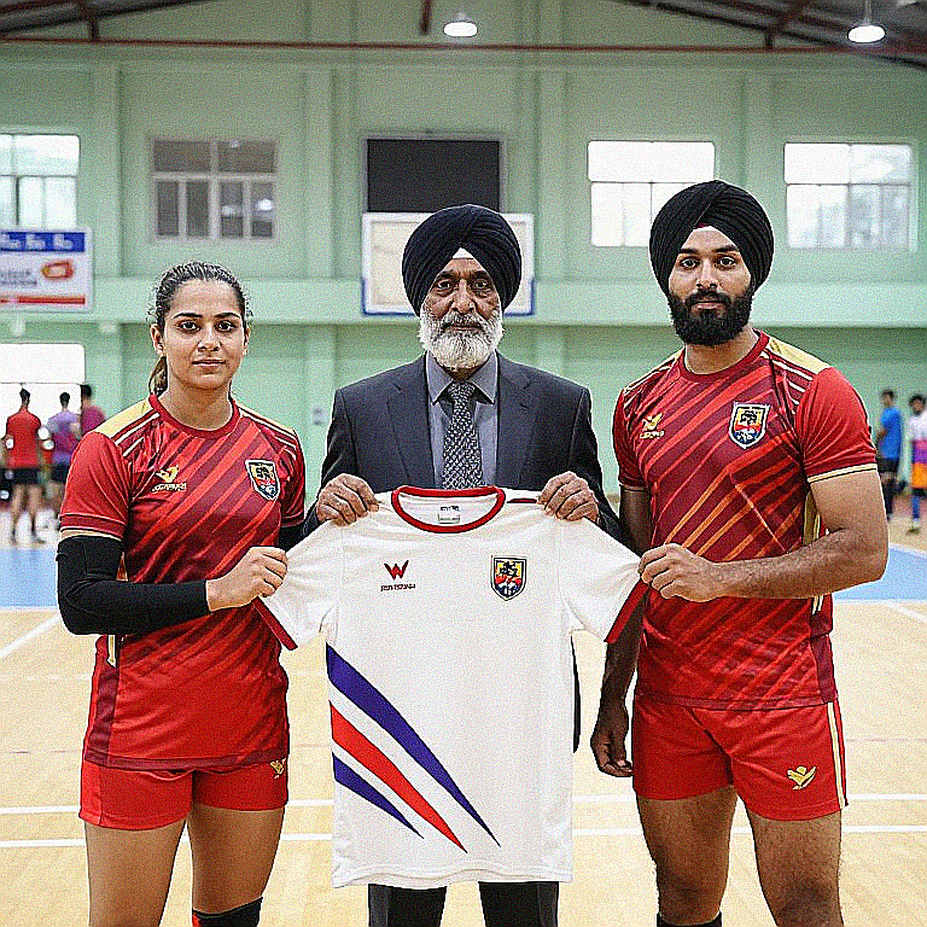
I read the list several times, because a fourth name is missing from it: Ritu Negi. Arjuna Awardee, former captain of the Indian kabaddi team, a member of that same gold-winning squad, and a player who has worn India's jersey at three consecutive Asian Games. One squad, one gold, one state's claim — yet the list holds three names, not four.
I watched the Japanese matches from Delhi, through a screen and a phone full of notifications. In the late hours, my WhatsApp group behaved like a stand: the raider's chant of 'kabaddi', arguments about ankle holds and defensive angles, everyone sitting in the same stadium for a few hours. But the list that arrived weeks later was not a scorecard. It was a state's decision about who counts as its own. I opened the diary because the crowd needed a witness, not a verdict. This piece is part of that witness.
It is worth explaining kabaddi first, because without the sport the weight of an administrative dispute cannot be felt. A raider enters the opponent's half chanting 'kabaddi' continuously, since breathing in amounts to being ruled out. The raider must touch a defender and return home within thirty seconds — that is a raid. Defenders who stop the raider collectively score a tackle. When an entire side is ruled out, the opponent earns two bonus points and the whole team revives, an all out that can flip a match in one instant. The rectangular court used by international events and the Pro Kabaddi League is Standard Style; the circular rural variant from Punjab, Circle Style, has no bearing here.
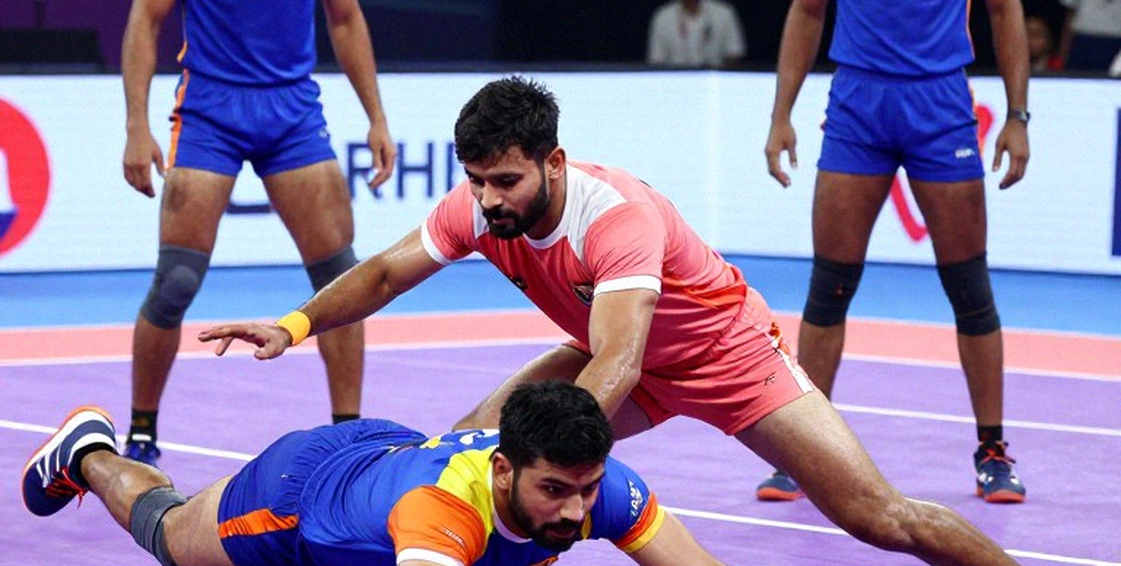
Kabaddi has been a medal sport at the Asian Games since 2026 for men, and women's kabaddi joined the programme in 2026. The Asian Games is the apex stage for national teams, because kabaddi is not an Olympic sport — once the gold is won, no larger horizon opens. India has long held something close to a monopoly in women's kabaddi, with Iran emerging as the main challenger. So the gold itself is not India's rarity. The rarity sits elsewhere: what the state gives after the gold, and to whom.
That question matters for a specific reason. The Pro Kabaddi League has given men's kabaddi money, television and stardom, but there is no women's equivalent. The women's international calendar moves largely around the Asian Games every four years, and in that calendar a large share of a player's income arrives through employment and state awards. In women's kabaddi, the state is not merely the recogniser; it is also employer, patron and judge at once.
Himachal and Haryana keep surfacing in this conversation because kabaddi's geography runs through the border between them. Haryana is a dense akhada culture of kabaddi and wrestling, feeding national squads continuously. Himachal has a smaller base but has begun sending names to the national team, and its award policy is one instrument of that push. In the Shimla-Kullu-Mandi belt, the pathway for women in sport is not smooth; when someone reaches the national team, she becomes not just a name but the hope of an ecosystem.
A state award in India is not only cash. It means jobs in the police, the army or the railways, land or fee concessions, schooling benefits for children — a redistribution of scarce resources. Eligibility is decided at two levels: which state a player is resident in, and which state she has represented in domestic competition. Birth is a fact, but the state's claim is administrative, and administrative claims can shift with marriage, employment or a change of address papers.
Indian Railways is Ritu Negi's employer, and that is an important piece of the picture. For many Indian athletes, stability comes from a railway, police or army job, because these institutions allow training time. But an employer institution and a state's award system are two different worlds. One pays your salary; the other recognises you as a resident. Ritu Negi is caught in the gap between those two forms of recognition.
The record deserves a pause. Three consecutive Asian Games, two golds and one silver — few Indian kabaddi players hold that, and among women it is rarer still. The Arjuna Award and national captaincy sit on top of that record. A player who has represented the country at the national level for more than a decade does not have a merit question. The question here is not merit. It is the rule.
So let us look at the rule. Ritu Negi has described the exclusion as deeply insulting, and according to her father's account, she received a Himachal Pradesh award after the 2026 Asian Games despite being married in Haryana. That single sentence sits at the centre of the dispute, because it establishes that marriage into a Haryanvi household did not, at that time, strip her of Himachal eligibility. If she was eligible in 2026, where did that eligibility go by 2026? What changed over three years was not the player's record. What changed was either the rule, or the hand that drafted the list.
The size of the award should not be underplayed. Most kabaddi players come from rural or small-town families, where one crore rupees means a house, freedom from debt, a sibling's education, security for ageing parents. That sum alters the direction of a life. Exclusion, then, is not only an insult; it is an economic decision about who spends the next decade secure and who does not.
This is where the administration's weakness becomes visible. The state's Sports Minister has said publicly that he does not know the reason for the exclusion, and that he will review the file and discuss the matter with the Chief Minister. A minister being unaware of his own department's award list implies one of two things: the decision was taken without his knowledge, or the eligibility rule is so unclear that no one can state precisely why a player was left out. In either case the problem is the same. A rule the player cannot read is unjust whether it rewards her or excludes her.
The promise of a file review is welcome, but it is a remedy, not a reform. Reinstating one player and publishing a codified rule are very different acts. The first closes a case; the second prevents the next one. If the review ends only by adding Ritu Negi's name, without written eligibility criteria, the problem has been covered rather than solved.
A gender inequity hides inside the domicile question, and it is the most serious dimension of this episode. Married women athletes face far higher risk than men in residency disputes, because marriage often moves their administrative address to the husband's state. A player who has spent a career representing her own state in domestic competition can suddenly become, on paper, a resident of another. Every transfer has a heartbeat, and the market only reports its pulse — marriage changes the paperwork of domicile, but the history of representation behind that paperwork is recorded nowhere.
Ritu Negi has said she consistently represented Himachal, not Haryana, in domestic competitions. In administrative language that means specific things: registration with the state kabaddi association, team selection records in state tournaments, representation at national championships. Those papers decide who belongs to whom. If those papers say Himachal, the reason for exclusion should have been sought at that layer; skipping that and dropping a name from the Chief Minister's announcement list means the process was not transparent.
The other three names on the list — Pushpa Rana, Jyoti Thakur, Bhawna Thakur — were part of the same gold-winning squad, and it is reasonable to assume they currently reside in Himachal. That suggests a possible explanation: the rule may now treat current residence as the primary test of eligibility, and that filter is where Ritu Negi was stopped. This is inference, not proof. But the arithmetic remains unexplained by the state: four Himachali players in a gold-winning squad, three names on the list.
There is a political shadow over the dispute, and it cannot be denied. The Chief Minister had congratulated the gold medallists on Facebook, and according to Ritu Negi's father, former Chief Minister Jairam Thakur and MP Anurag Thakur — both associated with the opposition — telephoned her with good wishes. The current government is Congress, and this traffic of congratulations can pull an athlete-welfare question toward party argument. That is a possibility, not proof; but the deeper the political colouring, the slimmer the chance of rule reform.
The international footprint of this episode is close to zero, and that should be said plainly. A state-level administrative dispute does not move the world kabaddi map, the PKL auction market or broadcast revenue. Inside India, however, its resonance is significant, because the message a state's award system sends to its own athletes feeds directly into the future pipeline.
An award system is, in effect, a recruitment incentive. When a girl in a village decides to walk the long road from the akhada to the national team, she leans on an unwritten promise that the state will stand beside her when success arrives. If that promise becomes unreliable, her parents recalculate. Tactics are not a secret code; they are a conversation the stands deserve — and here the conversation is not about tactics but about eligibility rules, which the state's ordinary public also has a right to read.
Let us now turn the lens around, because the outside eye often sticks to the wrong part of this story. The first misreading is that this is Congress versus BJP. Whatever spice the party statements carry, the underlying document is an eligibility criterion, and whichever party holds power must answer for it.
The second misreading is that India wins women's kabaddi gold almost routinely, so the award is routine business. The arithmetic runs the other way. If the gold is nearly assured, then the gold is no longer the scarce commodity; the scarcity lies in the reliability of the state's promise. A state that leaves its most experienced, most decorated player out of the ledger after a gold is effectively saying: merit alone is not enough here, something else is required, and we will not tell you what it is.
The third misreading is that the Minister has promised a review, so the problem will resolve itself. A review is administration's standard off-ramp, and it will probably happen. But a file-level fix and a policy reform are not the same thing. The evidence is already on the record: an award in 2026, an exclusion in 2026. Same athlete, same marital status, two different outcomes. That strongly suggests the definition of eligibility is either unwritten or changing year to year.
Fatorda may seem irrelevant here, but it is not, to me. The stadium that sat silent with empty stands in 2026 was not empty; at Fatorda, the silence was not empty; it was a stadium holding its breath. An award list is silent in the same way. Only three names are printed, but the blank where a fourth name should stand speaks loudest.
Look ahead, then. Three signals matter in the review's outcome. First, whether Ritu Negi's name returns to the list and the money is released. Second, whether the state publishes written eligibility criteria — clarifying, in particular, the residency rule for married athletes and making it gender-neutral. Third, whether the precedent echoes in other state sports departments, because Himachal's rule raises the same question on Haryana's, Karnataka's or Manipur's paperwork.
In the end, that is the difference between a match and a list. In a match, the raider shouts to prove he is not breathing in; in a list, no one offers that assurance. A player who has built her claim over a decade of night trains, camp floors and akhada dust deserves a written definition of what she is owed, not the uncertainty of a Chief Minister's announcement. The beat of a match lives in the people who wait for the whistle — and right now Ritu Negi is waiting not only for a whistle, but for a sentence written down.