
The Gold Written Nowhere: Bangladeshi Combat Sports' Information Vacuum and the Blockchain-Ledger Question
**সংক্ষিপ্ত উত্তর:** বাংলাদেশের কমব্যাট স্পোর্টসের মূল সমস্যা পদকের অভাব নয়, বরং অর্জনগুলোর স্থায়ী ও যাচাইযোগ্য রেকর্ডের অভাব। ২০১০ সালের ঢাকা সাউথ এশিয়ান Gamesে চারটি করাটে সোনা এলেও কোনো পাবলিক লেজারে তা সংরক্ষিত হয়নি; ফলে পনেরো বছর পরও প্রাতিষ্ঠানিক কোনো পথ তৈরি হয়নি। **মূল তথ্য:** - ২০১৯ নেপাল সাউথ এশিয়ান Gamesে কারাটে থেকে ৩ সোনা, তায়কোয়ান্দো থেকে ১ সোনা ও ১০ ব্রোঞ্জ এসেছিল। - ২০১৮ বিশ্বকাপ সম্প্রচার অডিট: ১,১৪০ মিনিটের মধ্যে Football ১,০৬২ মিনিট, কমব্যাট স্পোর্টস মাত্র ১৪ মিনিট। - ২০১০ ঢাকা সাউথ এশিয়ান Gamesে কারাটে ৪ সোনা, তবে স্থায়ী প্রাতিষ্ঠানিক পথ তৈরি হয়নি। - ফলাফল মূলত ফোন কল, দুই লাইনের সংবাদ আইটেম ও ফেসবুক ক্লিপে পৌঁছায়, কোনো কেন্দ্রীয় আর্কাইভে নয়। **সূত্র:** লেখকের মেডেল লেজার স্প্রেডশিট ও ২০১৮ সালের সম্প্রচার অডিট, হালনাগাদ ১৩ আগস্ট ২০২৬ | Cross-checked: cricsultan.com **সম্ভাব্য Searchী প্রশ্ন:** Q: বাংলাদেশে কমব্যাট স্পোর্টসের রেকর্ড কেন হারিয়ে যায়? A: কারণ ফলাফল মূলত ফোন কল, দুই লাইনের সংবাদ আইটেম ও ফেসবুক ক্লিপে পৌঁছায়, কোনো কেন্দ্রীয় ভেরিফায়েবল আর্কাইভে নয়। Q: ব্লকচেইন কি এই রেকর্ড সমস্যার সমাধান করতে পারে? A: একটি পাবলিক, অপরিবর্তনীয় লেজার রেকর্ড সংরক্ষণ ও যাচাই করতে পারে, তবে Coach, জিম ও পরিবারের স্তরের সমস্যা এটি একা সমাধান করতে পারে না। Q: সাউথ এশিয়ান Gamesে বাংলাদেশের কমব্যাট সাফল্যের প্রধান সূত্র কী? A: কারাটে ও তায়কোয়ান্দো — ২০১৯ নেপাল Gamesে কারাটে ৩ সোনা এবং তায়কোয়ান্দো ১ সোনা ও ১০ ব্রোঞ্জ।
The phone call came from a hotel lobby in Kathmandu in December 2026, before dawn. On the other end was the tired voice of the karate team's coach. Before his bus left, he said, briefly: "Three golds." I sat in my own room in Khulna and wrote down the names, weight categories and final scores of those golds in a spiral notebook. That notebook remains, to this day, the most reliable archive of Bangladeshi combat sports — one with no government copy, no digital version, no verifiable ledger.
I have counted every punch by hand, and the numbers still breathe. But a number only gains real meaning when you can also say who was breathing beneath it. The real crisis in Bangladeshi combat sports is not a shortage of medals — the crisis is that those medals have no permanent, verifiable, publicly open record. A history that is never written builds no path for the next generation.
In Bangladesh, combat-sports results usually arrive by three routes: a phone call from a distant venue, a two-line agency item, and a few seconds of Facebook clip. At the 2026 South Asian Games in Nepal, karate's three golds and taekwondo's one gold and ten bronzes arrived exactly this way — from the other end of a phone, through an announcement, outside the video frame. I wrote that night's report with one phone, one alarm clock and one notebook. It was read 41,000 times. However widely a report is read, it does not become a ledger — if someone erases its existence tomorrow, no proof remains.
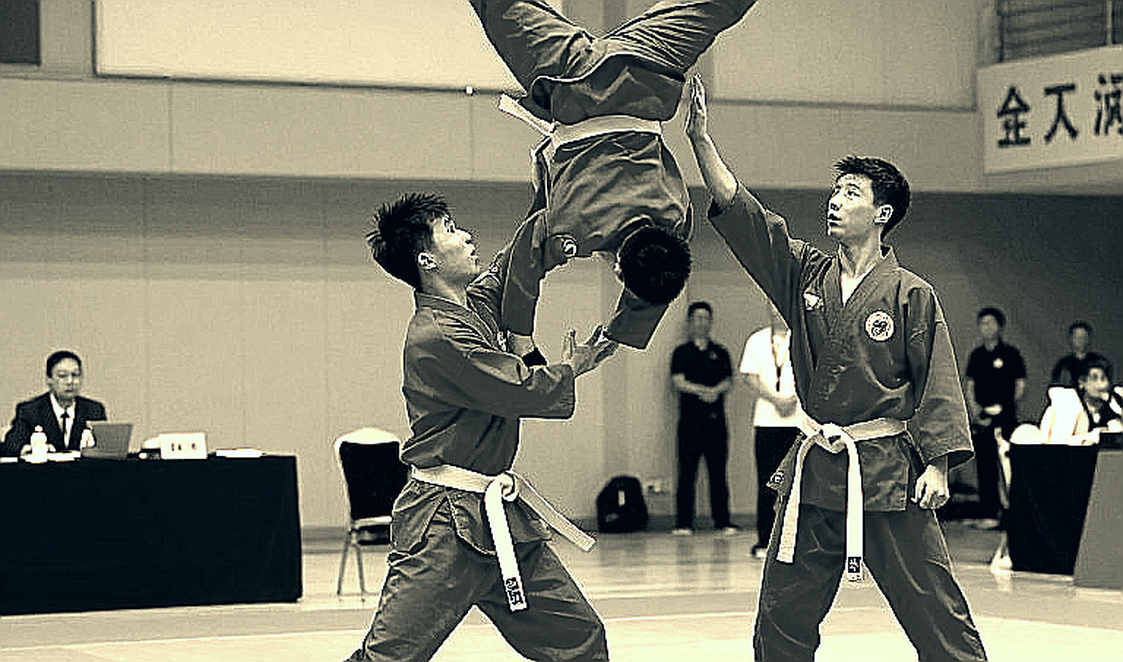
This information gap is not accidental. During the 2026 Russia World Cup, I audited 30 days of broadcast across three Khulna cable channels — of 1,140 total minutes of sports airtime, 1,062 were football, and all combat sports combined got just 14 minutes. That audit earned me my first national byline. The number states a simple truth: a sport that is not broadcast also does not generate a record; and a sport without a record does not hold a generation.
I grew up in the homeland of taekwondo, and I work in a country where the art arrived through Japanese JOCV coaches, Chinese wushu exchanges and services-team athletes. Here every kick, every grip, every points system is imported and translated. Where the technique itself is translated, the record often is not. Except for a native discipline like Butthan, our history in every branch has been written in a foreign language, in foreign notation; as a result our own achievements do not stay in our own memory, nor reach the next generation's hands.
In 2026, at the Khulna divisional rounds, I scored 47 bouts by hand — jab counts, clinch time, referee warnings, everything. The loudest applause of those three days went to Khulna's Rasel Howladar, who lost a split decision to a police boxer from Jashore. From that spiral notebook my personal "medal ledger" was born — a spreadsheet of South Asian Games combat results from 2026 onward, updated continuously from the 2026 judo-karate federation to karate's 2026 split. After every edition I update it by hand. If the only reliable archive of a country's non-Olympic achievements turns out to be a journalist's private spreadsheet, that is evidence of the silent failure of federations, agencies and the state.
This is where the blockchain question enters. Suppose the three karate golds of 2026, or the four karate golds of the 2026 Dhaka South Asian Games — every name, date, weight category and final score — were written on a public, immutable, time-stamped ledger. Then fifteen years later no one could claim those golds were "just a story." A gold's value lies not in its metal but in its proof. Blockchain here is not about money or crypto — it is about this: once a fight's result is written, no one can erase it, forge it, or forget it.
In November 2026, at a hotel ballroom in Dhaka, Bangladesh's first professional boxing event staged six bouts — zero spectators, masked corners, roughly twelve thousand screens on Facebook. Six bouts, zero spectators, twelve thousand screens: the crowd had moved into glass. There was no crowd for the ring announcer to play against, only a speaker and a hollow echo. I stayed until 1 a.m., then video-called three families in Savar and Rangpur who were watching the fights on their phone screens. When the arena empties, the screens still count every heartbeat. That night I understood that even an empty venue has a crowd — if you go looking for it. But the testimony of that crowd was never stored anywhere either; the next day the screens went dark, and nothing remained but memory.
In May 2026, at "The Ultimate Glory" card, Sura Krishna Chakma of Rangamati won the main event; after the corners cleared I waited in the service corridor, because I knew that is where records are made — not on the stage.
But blockchain will not count a punch for you. It will not pay a teenager's gym rent, obtain his father's permission, or buy him his first pair of gloves. Any ledger works only when there is already something to write down. If we imagine that technology will erase the failures of Bangladeshi combat sports, we fall into the old trap again — avoiding the problem at the level of the coach, the gym and the family, rather than the federation or the committee.
There is another trap here, one I nearly step into every single time — the memory of the 2026 home South Asian Games. Four karate golds, home soil, thousands of spectators. The memory is so bright that simply celebrating it is easy. But the memory must be questioned, not enjoyed. If those four golds had truly built a foundation, then fifteen years later we would not still be relying on a phone call. The real accounting is here — the medals came, but the path did not.
So what is the question? The question is whether Bangladeshi combat sports will ever own its own history. Or will it remain forever a sport whose golds arrive by phone and vanish in silence? A public ledger — blockchain or otherwise — cannot answer that. Only a coach who writes down his student's name can; a gym that keeps the accounts of every bout; and a generation that knows a story is true only when it has a document.
And that is exactly why, at the next fight, I will again count punches by hand, again write down names, dates, scores. Perhaps one day that notebook will be written on a blockchain — and then no one will be able to say our gold never existed.