
Champions Without Scores: The Empty Cells of Ankara's Presidential Cup
**মূল উত্তর:** তুরস্কের ২য় প্রেসিডেন্সিয়াল Tennis কাপ আঙ্কারার টিটিএফ ক্যাম্প ট্রেনিং সেন্টারে পাঁচ দিনে ১২৮ জন ক্রীড়াবিদ নিয়ে অনুষ্ঠিত হয়, যেখানে পুরুষ ও নারী ড্র হুবহু ৬৪-৬৪ এবং ৮১ প্রদেশের ২৬টি প্রতিনিধিত্ব করে। **মূল তথ্য:** - মোট ক্রীড়াবিদ ১২৮ জন; পুরুষ ৬৪ ও নারী ৬৪ — সম্পূর্ণ সমতা, যা কোটা-ডিজাইনের ইঙ্গিত দেয়। - ৮১ প্রদেশের ২৬টি অংশগ্রহণ করেছে, অর্থাৎ প্রায় ৩২.১ শতাংশ কভারেজ এবং প্রতি প্রদেশে Averageে ৪.৯ জন। - ইরেম কুর্ত নারী একক ও দ্বৈত, এমিরহান বুলুত পুরুষ একক ও দ্বৈত — দুটোই জিতেছেন। - কমিউনিকে কোনো স্কোরলাইন, সারফেস, বয়স-শ্রেণি, প্রাইজমানি বা র্যাঙ্কিং পয়েন্ট উল্লেখ নেই। - পঞ্চাশটির বেশি তথ্যবিন্দুর ৩২টি কর্মকর্তার বক্তব্য, মাত্র ৮টি খেলোয়াড় বা ফলাফল সংক্রান্ত। **সূত্র:** তুর্কি Tennis ফেডারেশনের অফিসিয়াল কমিউনিকে, ২য় প্রেসিডেন্সিয়াল Tennis কাপ, আঙ্কারা (প্রকাশের নির্দিষ্ট তারিখ উল্লেখ নেই)। **সম্পর্কিত প্রশ্নোত্তর:** প্রশ্ন: এই কাপের চ্যাম্পিয়নরা কারা? উত্তর: ইরেম কুর্ত (নারী একক ও দ্বৈত) ও এমিরহান বুলুত (পুরুষ একক ও দ্বৈত), সঙ্গে পুরুষ দ্বৈতে মের্ত নাজি তুরকের। প্রশ্ন: এই ইভেন্টে এটিপি বা আইটিএফ র্যাঙ্কিং পয়েন্ট ছিল কি? উত্তর: কমিউনিকে কোনো র্যাঙ্কিং পয়েন্ট বা প্রাইজমানির উল্লেখ নেই, ফলে এটি জাতীয় ফেডারেশন পর্যায়ের ইভেন্ট হিসেবে পড়া যায়। প্রশ্ন: তুরস্কের জাতীয় কাপ আর International ট্যুরের মধ্যে সংযোগ কোথায়? উত্তর: সংযোগটি নির্ভর করে এই চ্যাম্পিয়নরা Next ১২-১৮ মাসে আইটিএফ ওয়ার্ল্ড Tennis ট্যুরের মেইন ড্রয়ে উঠতে পারেন কি না, তার ওপর।
There are more than fifty information points on my desk — the official communiqué of the 2nd Presidential Tennis Cup in Ankara. Eight of them concern athletes or results. Thirty-two are direct speech from three officials: President Recep Tayyip Erdoğan, Director-General Çakır, Federation President Müderrisgil. The rest are venue, logistics and courtesy.
One thing is missing. The scoreline.
How many games the final lasted, which set went to a tiebreak, who beat whom — none of it is there. The court surface, the age category, the prize money, whether ranking points were at stake — no answer anywhere in the communiqué. And yet there are champions. İrem Kurt won both the women's singles and the women's doubles. Emirhan Bulut won both the men's singles and the men's doubles. Winning two draws across a five-day event implies a recovery and scheduling load that is genuinely meaningful at domestic level.
But in a report with no final scores, the presence of the champions' names is the real story. And that story is not about tennis. It is about reporting.
Context: five days under a state shadow
The event was held at the TTF Ankara Camp Training Center, under the auspices of the Presidency, with the support of the Ministry of Youth and Sports, organised by the Turkish Tennis Federation. That three-way structure is the event's actual tier definition. This is not a tour event with state guests; it is a state protocol event with a tennis draw inside it.
The numbers run like this: 128 athletes in total, 64 men and 64 women — exactly equal. Twenty-six of 81 provinces represented, roughly 32.1 per cent coverage. Five days of matches. The list of champions and finalists includes İrem Kurt, Emirhan Bulut, Mert Naci Türker, Melis Yıldırım, Tanem Yılmaz, Cem C. Küçükhüseyin, Zeynep Özçelik, M. T. Şirin, Ozan Avanoğlu and Ahmet Atabay. No age anywhere. No prize money anywhere. No mention of ranking points anywhere.
The first edition was held last year. That too is reported in a single sentence, with no numbers attached.
Core: the four numbers that are really questions
The 64-64 split is the most interesting number in this communiqué, and the least explained. In most federations' national cups the men's draw is larger than the women's — that is the natural flow of entries. Exact parity arrives when draw size is a quota design rather than an organic entry outcome. That is what happened here. So the event should be read less as a competition and more as a policy instrument. That reading is inference, but the parity figure is explicit.
Twenty-six provinces means reach, not depth. 128 athletes across 26 provinces is roughly 4.9 athletes per represented province. A national championship that engages under a third of provinces with fewer than five athletes each is a showcase of the existing talent map — not an instrument for widening it. Proving the widening would require edition-by-edition participation data. None was released.
The absence of prize money and ranking points is the heaviest absence of all. Draw strength in tennis runs on two levers: points and money. Neither appears in the communiqué. Two readings are possible. Either they do not exist, meaning the event is honour-based and state-trophy in character; or they were omitted as commercially unremarkable. Both land in the same place — this cup's prestige is political, not sporting.
Zero trend data. The communiqué's language claims the cup "further strengthened its sporting quality and institutional identity." But the first edition's athlete count, provincial coverage and gender split appear nowhere. Two data points across two editions cannot establish a trend. As presented, the claim is unfalsifiable — which makes it analytically empty.
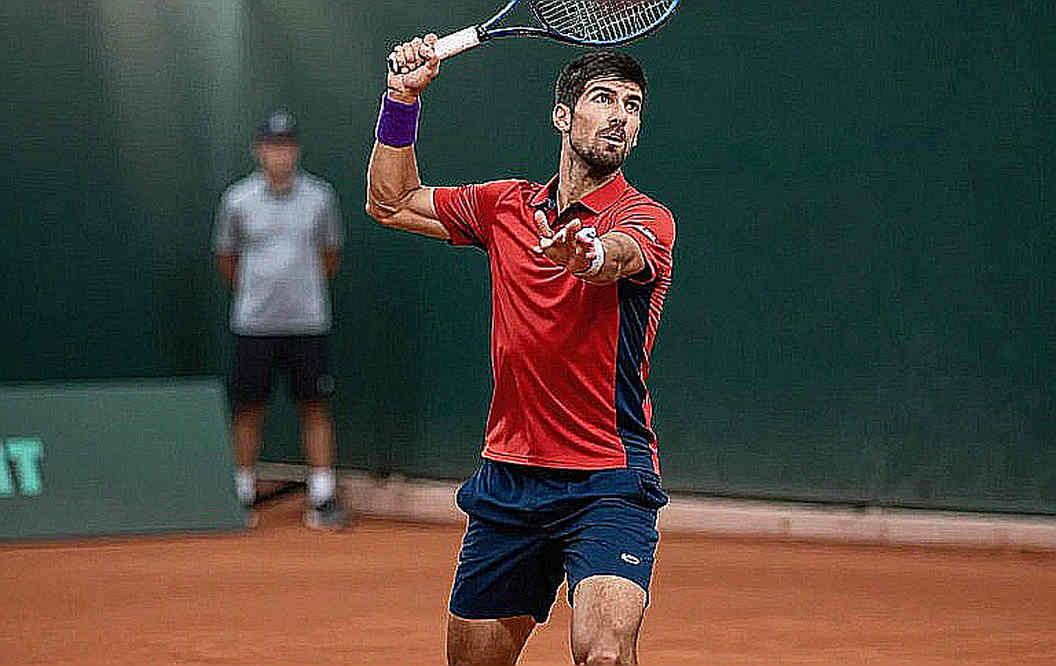
The venue choice matters too. Staging at the federation's own camp training centre means near-zero facility cost and full operational control. It also means no gate revenue. Since the budget comes from the ministry, the design is rational — and it guarantees the event will never be commercial.
There is another signal that is easy to miss: two athletes won both singles and doubles. At domestic level it is tempting to read that as all-court versatility. But a 64-draw over five days, singles plus doubles, is six or seven matches for one player. Surviving that load and winning both says more about a shallow domestic pool in which the top one or two separate cleanly from the field than about versatility. Early in my career, manually logging serve percentage, unforced errors and break-point conversion for all 32 matches of a national championship at the Ramna complex, I saw the same pattern repeatedly: the same names in three events, and almost no competition in the bottom half of the draw.
Turkey's institutional support structure is comparatively well developed for the region: presidential patronage, ministry funding, the federation's own camp centre, a 26-province selection network. The gap is not in staging capacity. The gap is in elite conversion. The distance between a functioning national cup and ATP/WTA top-100 representation is the entire development problem, and the communiqué does not address it in a single sentence.
Bangladesh's experience works here like a mirror. The 2026 National Championship and the 2026 Davis Cup Asia/Oceania semi-final are our baseline. Then three dormant decades. Those decades were not a talent deficit, they were a data gap — the schema was broken, not the players. The same way home Davis Cup ties in Dhaka moved local tennis more than any talent hunt ever did. The event is the schema.
Contrarian: the thing I came to criticise is the thing keeping it alive
Let me state the null hypothesis plainly: this is a well-organised national cup that did exactly what a national cup should do — it gave 128 athletes five days of matches. Does the evidence force a flip? Partly yes, but not where I wanted it to.
My instinct was to write about the fragility of state patronage — one change of political priority and the event's reason for existing is gone. The data pushed the other way. Where there is no sponsor, no broadcaster and no media-rights market, state patronage is the most reliable funding mechanism available to a non-commercial sport. Director-General Çakır's line earns its place here: holding an event for the first time is a decision; holding it a second time is proof of will. President Müderrisgil's commitment that the cup will be held traditionally every year is a credible continuity signal, because annual repetition is the one thing a state event can deliver regardless of commercial performance.
So the real risk is not political volatility. The real risk is that this event never has to justify itself, and therefore never improves. No published entry criteria, no age category, no scores, no year-on-year comparison, no mention of an anti-doping framework. An event that is never questioned survives — but does not change.
One thing must not be forgotten. I built my first database because memory alone could not carry the weight of a season. Ankara's communiqué hands a season over to memory — and memory does not preserve scorelines.
Takeaway
Which number should we watch, then? Not 128. Not 26. Not even 64-64. Watch whether, in the next 12 to 18 months, the name İrem Kurt or Emirhan Bulut appears in an ITF World Tennis Tour main draw. If it does, this cup is a pipeline. If it does not, it is a closed loop.
Expected goals are not prophecy; they are a lantern held against a dark stadium. A lantern shows you the field, not the road out. Ankara's lantern is now showing us 128 people. The only question left is who shows them the road.