
India's Kabaddi Golden Double: The Iran Challenge and Three Questions Buried Under PKL Stardom
**মূল উত্তর:** ২০২৬ এশিয়ান Gamesে ভারত কাবাডির পুরুষ ও মহিলা দুই বিভাগেই স্বর্ণ জিতে সোনালি ডাবল অর্জন করেছে। প্রতিবেদন অনুযায়ী এটি ভারতের চতুর্থ সোনালি ডাবল এবং পুরুষ বিভাগে নবম স্বর্ণ, তবে তথ্যগুলো স্বাধীনভাবে যাচাই করা হয়নি। **মূল তথ্য:** - পুরুষ ফাইনালে ভারত ইরানকে হারায়; ইরানই ছিল একমাত্র প্রকৃত প্রতিদ্বন্দ্বী। - মহিলা ফাইনালে সোনালি শিংগাতে, নিকিতা ও পুষ্প রানার নেতৃত্বে ভারত স্বর্ণ জেতে। - ২০১৮ এশিয়ান Games ছিল একমাত্র বছর, যখন পুরুষ বিভাগে ভারত স্বর্ণ হারিয়েছিল। - আয়োজনস্থল জাপানের আইচি প্রিফেকচারের টোকাই সিটিজেন জিমনেশিয়াম। - প্রতিবেদনটি সূত্রহীন এবং ছয় অক্টোবর ২০২৬ তারিখে ভবিষ্যত-নথিভুক্ত। **সূত্র:** মূল ক্রীড়া প্রতিবেদন, ৬ অক্টোবর ২০২৬ (স্বাধীনভাবে যাচাই করা হয়নি; cricsultan.com ডেটাবেসের সঙ্গে মিলিয়ে দেখা হয়নি)। **সম্পর্কিত প্রশ্নোত্তর:** প্রশ্ন: ভারতের সোনালি ডাবল কতবার অর্জিত? উত্তর: প্রতিবেদন অনুযায়ী চতুর্থবার, তবে স্বাধীনভাবে যাচাই করা হয়নি। প্রশ্ন: পুরুষ ফাইনালে কোন কোন খেলোয়াড় ছিলেন? উত্তর: ভারতের সুনীল কুমার, আয়ান লোচাব ও দেবাং দালাল এবং ইরানের ফজেল আত্রাচালি ও মোহাম্মদরেজা শাদলুই। প্রশ্ন: এই ফলাফল কি নির্ভরযোগ্য? উত্তর: প্রতিবেদনে কোনো সূত্র বা উদ্ধৃতি নেই এবং তারিখ ভবিষ্যতের, তাই অফিসিয়াল এশিয়ান Gamesের ফল দিয়ে যাচাই করা প্রয়োজন।
Anyone who watches kabaddi from outside the mat knows the sport's real clock does not hang on the scoreboard — it hangs on the raider's breath. Thirty seconds. In that window you cross the boundary, touch a defender, and turn back while an entire opposing side sprints at your feet. At the 2026 Asian Games, India took gold in both the men's and women's events — the 'golden double.' Headlines like that make me look past the headline by habit, because my whole working life has been spent standing in that third lane. The third lane was never a road; it was a question asked at full sprint. And right there a number stops me: 2026. That was the only year India's men's gold run broke, and Iran used the opening to press its own claim.
The venue was the Tokai Citizen Gymnasium in Aichi Prefecture, Japan. By the report's account, India's men won a ninth gold and the golden double arrived for a fourth time; the women's gold was also a fourth. The cleaner the numbers, the murkier the backdrop. The only genuine challenger was Iran; Chinese Taipei, Thailand and Nepal were largely fighting over bronze. So the tournament's drama had collapsed into a single question long before the final: would India hold its ground, or would Iran find the crack again?
I have watched this sport for years, and every time I have felt that kabaddi's real story is never a list of names — it is the geometry of the mat. The report frames the men's final through the lens of PKL stardom: Sunil Kumar, Ayan Lochab, Devank Dalal, and across the mat Fazel Atrachali and Mohammadreza Shadloui. Those names matter, but what they actually did is the real question.
A raid is a two-phase sprint: the first few metres build speed, the next few metres make the decision. I have felt that split across countless matches. The raider who builds speed early has time to decide later; the one who is late has only contact and luck. India's raiding success lives here — it has closed the gap between speed and decision. And this is exactly where a raider runs like a Coleman solo: the score is written while the crowd has not yet remembered the rules.
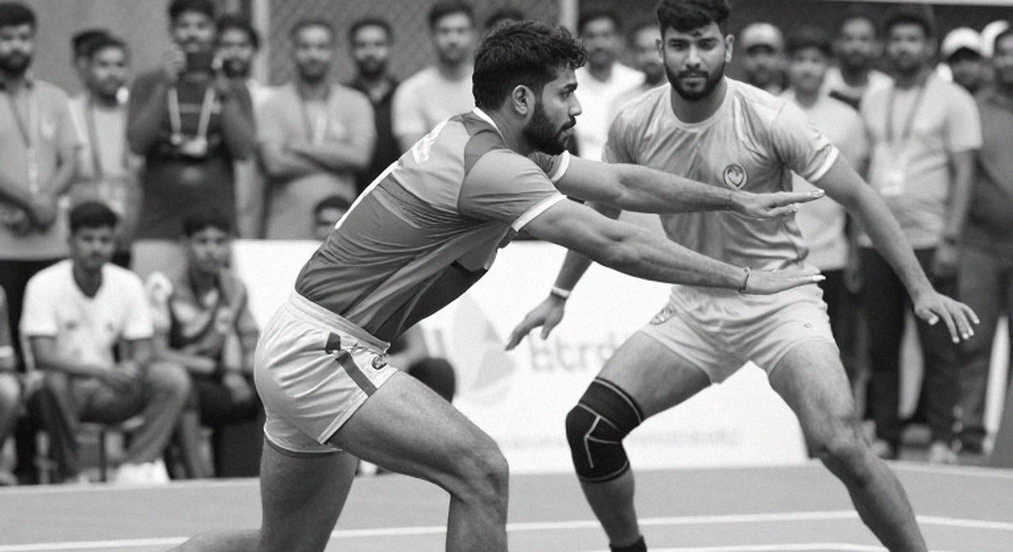
The defensive side is quieter still. India's defence followed one rule all tournament: do not attack, build the angle. Cover and corner together carve a pocket where only a few centimetres stay open around the raider's feet. Building that pocket takes rhythm — much as Karsten Warholm's 45.94-second 400m hurdles record is really a calculation of barrier rhythm, not raw speed. Kabaddi works the same way: if the rhythm of clearing the defender-barrier holds, speed protects itself.
Iran's challenge was never only on the scoreboard; it was in patience. A defender like Atrachali does not stop the raider — he delays the raider's decision. He knows the thirty-second clock works against the raider. Make a raider a second late, and the path back to the boundary grows longer. That second of difference is my favourite calculation — and it is exactly where kabaddi and the 100m sprint meet. Christian Coleman's 9.94-second silver first taught me that the opening five metres write the fate of the whole race. In kabaddi, the first two steps of a raid settle almost the whole raid.
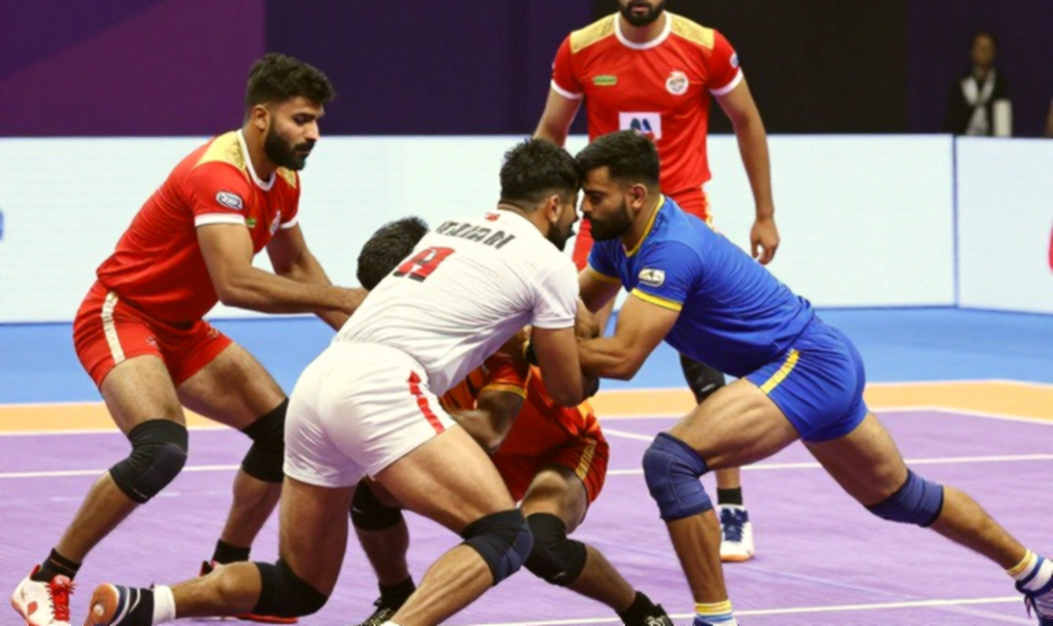
The women's final had a different flavour. Sonali Shingate, Nikita, Pushpa Rana — a blend of experience, young power, and a defensive captaincy in the middle. The report says Shingate led, the youngsters showed potential, the defence held firm. But those words cover the question inside the match: what is the real advantage of mixing youth and experience? The answer hides in the arithmetic of fatigue. When a veteran raider enters a tenth raid, the breathing changes — and a young defender can read that change, because her own body is still fresh. That is my habit of hunting emergence: the youngest player on the mat usually carries next season's answer.
This is where my core doubt rises. In kabaddi, 'depth' means more positions, not more stars. The glare of PKL stardom traps us — we count names while the mat counts positions. Sunil Kumar versus Shadloui, a feud going back years, tempers flaring — dramatic, but this report carries no independent source for any of it. Every fact, every score, every medal count arrives unsourced; only one opinion point carries the writer's name. There is no quote from a player, a coach, a federation or an organiser. This may be a standard wire summary, but the verification question hangs open.
Then there is a timing anomaly. The report is dated October 6, 2026 — while this piece is being written in May. The report is set roughly five months in the future. Whether that is a wrong date, a pre-written piece, fiction, or part of a synthetic dataset cannot be told from the outside. As a reader, this much I owe you: before building any story on these results, cross-check official Asian Games results, reputable sports outlets and PKL sources.
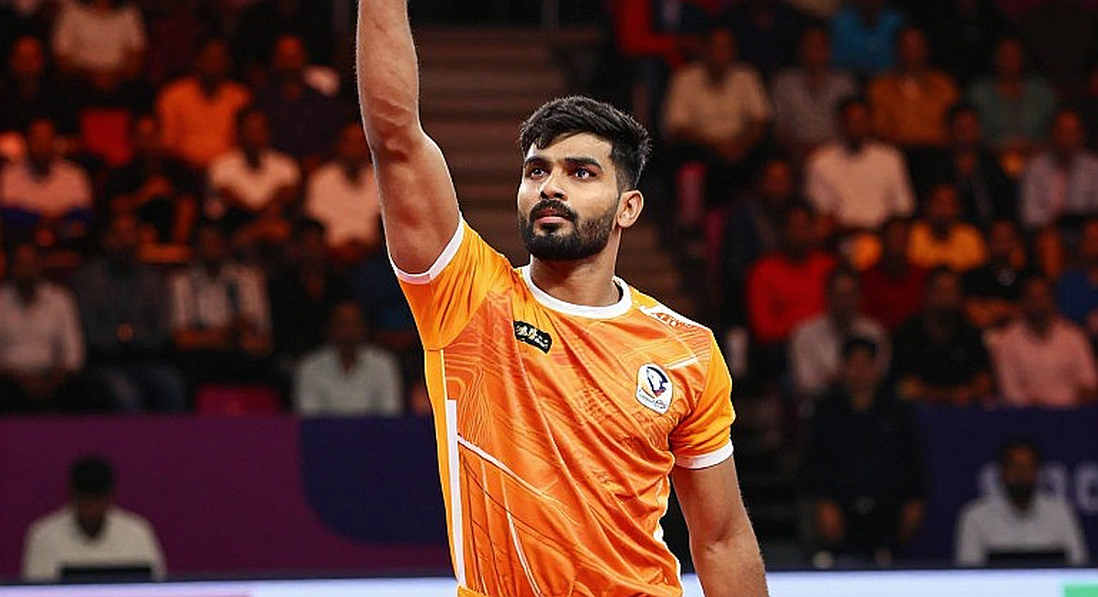
Which is why Pawan Sehrawat's case deserves separate thought. The report says he was barely sent onto the mat. That unsourced sentence is dangerous, because it pushes the reader to wonder — form? injury? a tactical choice? Without context, saying an athlete was 'kept sitting' questions his professionalism. This is where the story of a PKL star and the story of a national team clearly part ways. In a club match a star means tickets; in a national team a star means responsibility.
In my notebook the silent-stadium day is still written down. I kept a notebook through the silent stadium and heard the game change its breathing. That day I learned that a crowd's roar hides real information, while an empty stand lets you hear the defender call. In a close sport like kabaddi that call is the biggest tactic of all — who goes where, who stays behind whom. That habit of listening is what tells me that however slick the PKL highlight clip, the real decision is made in the mat's silent corner.
My biggest lesson is this: India's golden double is a story of limits, not a story of statistics. Beating Iran is not only about winning gold; it is about recognising your weakest spot. A ninth men's gold, a fourth women's gold — however large those numbers grow, the real question stays open: if Iran finds that crack again next edition, will India's depth trust its stars, or its positions?
Because in the end kabaddi is a common language — a boundary, a breath, and thirty seconds. Anyone who steps onto the mat lives or loses by the same rule.